Sanket
Sanket
Sanket
System Design
System Design
System Design
Time | 4 Weeks
2024
Team | 4 People
Project Guide
Dr. Anil Sinha
Prof. Saurabh Vyas
Tools
Adobe Illustrator
Adobe Indesign
Adobe Photoshop
My Contribution
User research
Information Architecture
Curriculum Design
System Mapping
Stakeholder Engagement
Learnings
Participatory Reserach
Play as a team
System is the experience
Embrace the Interactive process
Steer through chaos
Around 63 million deaf individuals in India rely on sign language for communication, with over 6.3% of India’s population as same as the number of Marathi speakers. Despite this, Indian Sign Language (ISL) remains largely absent from mainstream education, creating significant communication barriers for the deaf and mute community. Schools for the deaf operate with unique challenges, where students primarily communicate through sign language, yet they often struggle to integrate into broader society due to a lack of awareness and understanding among the hearing population. Education plays a crucial role in shaping an inclusive society, yet most mainstream schools in India do not teach ISL, leaving deaf students isolated in communication.
Introduction
Focusing on a school for the deaf and mute in my system design research allows for a deeper understanding of inclusive and accessible design. These schools have unique communication needs, emphasizing visual, tactile, and non-verbal interactions.
My personal connection growing up with my special needs brother sparked my interest in designing systems that foster accessibility, empathy, and inclusivity. This research aims to bridge communication gaps and create environments where everyone feels understood and included.
Why
The absence of Indian Sign Language (ISL) education in mainstream schools creates communication barriers, limiting inclusivity and accessibility for the deaf and mute community.
Problem
Statement
Challenges included lack of awareness, resistance to change, and standardization issues, along with limited institutional support and the need for teacher training, while many parents were hesitant to openly discuss their child’s needs, further highlighting the gap in inclusive education.
Challenges
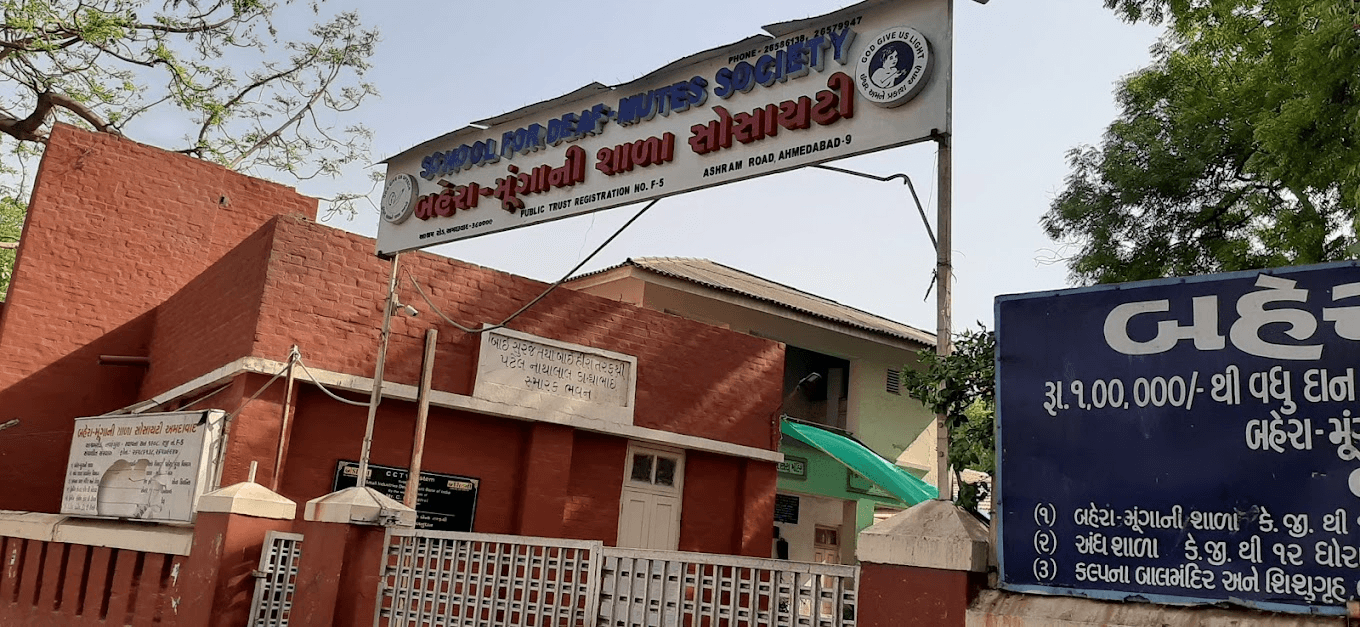
School of Mute and Deaf
Ashram Rd, opposite Times Of India, Muslim Society, Navrangpura, Ahmedabad, Gujarat 380014.
For interviews and surveys, we studied this school and conducted desk research to gain deeper insights.
We conducted user interviews with Anant Joshi(Chairman, Goa Association of the Deaf) and teachers, students to gain insights on this topic.
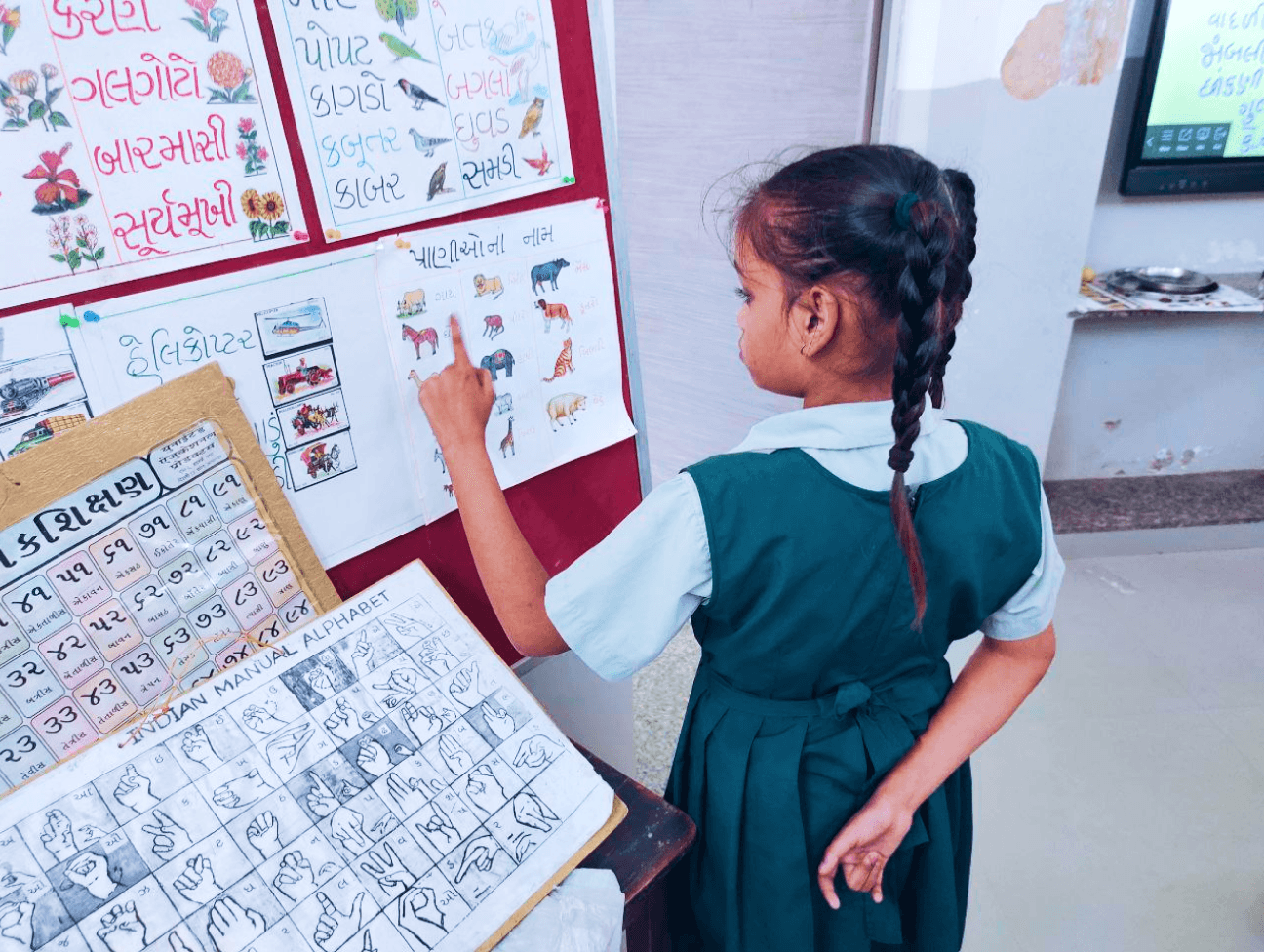
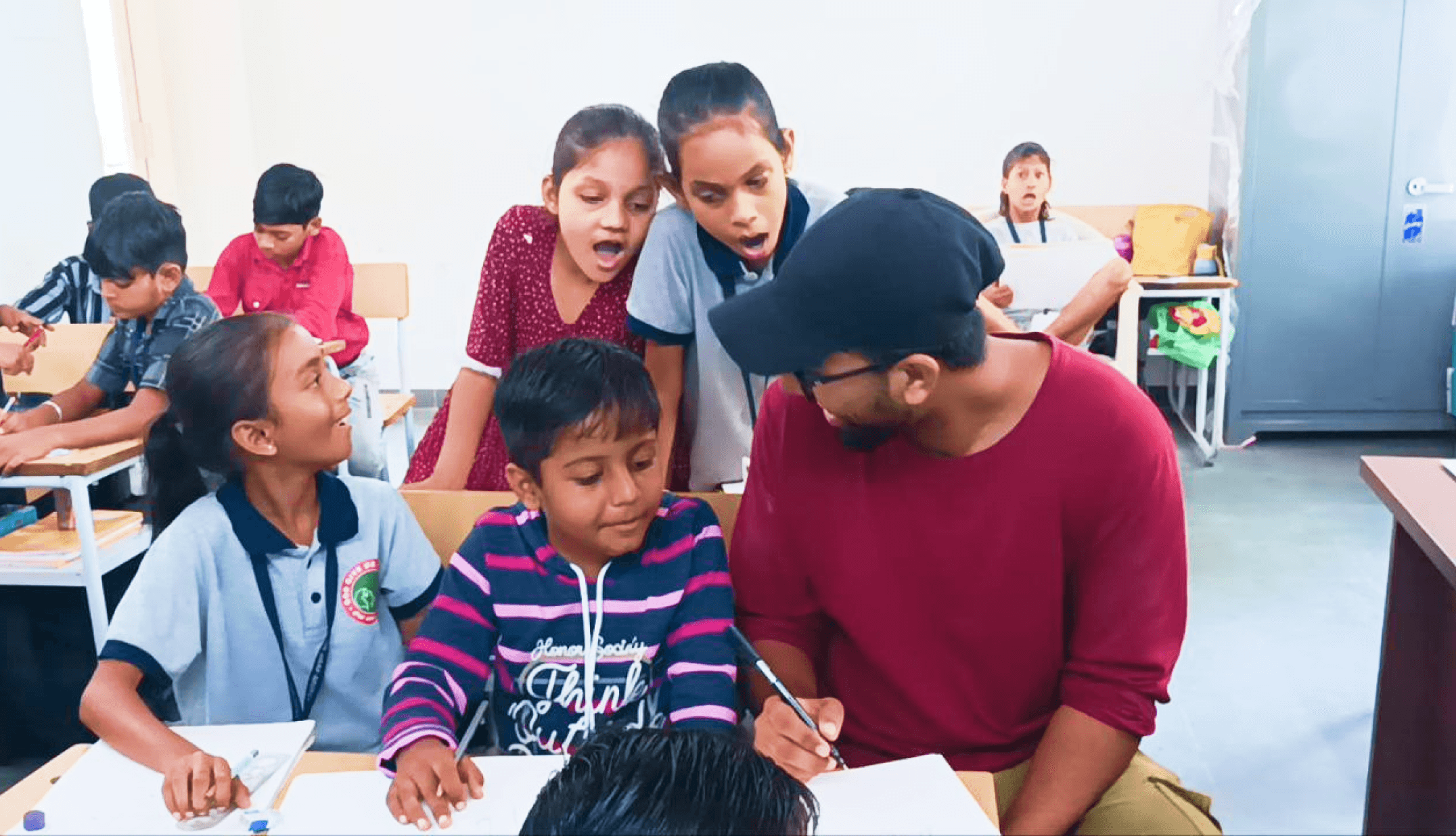
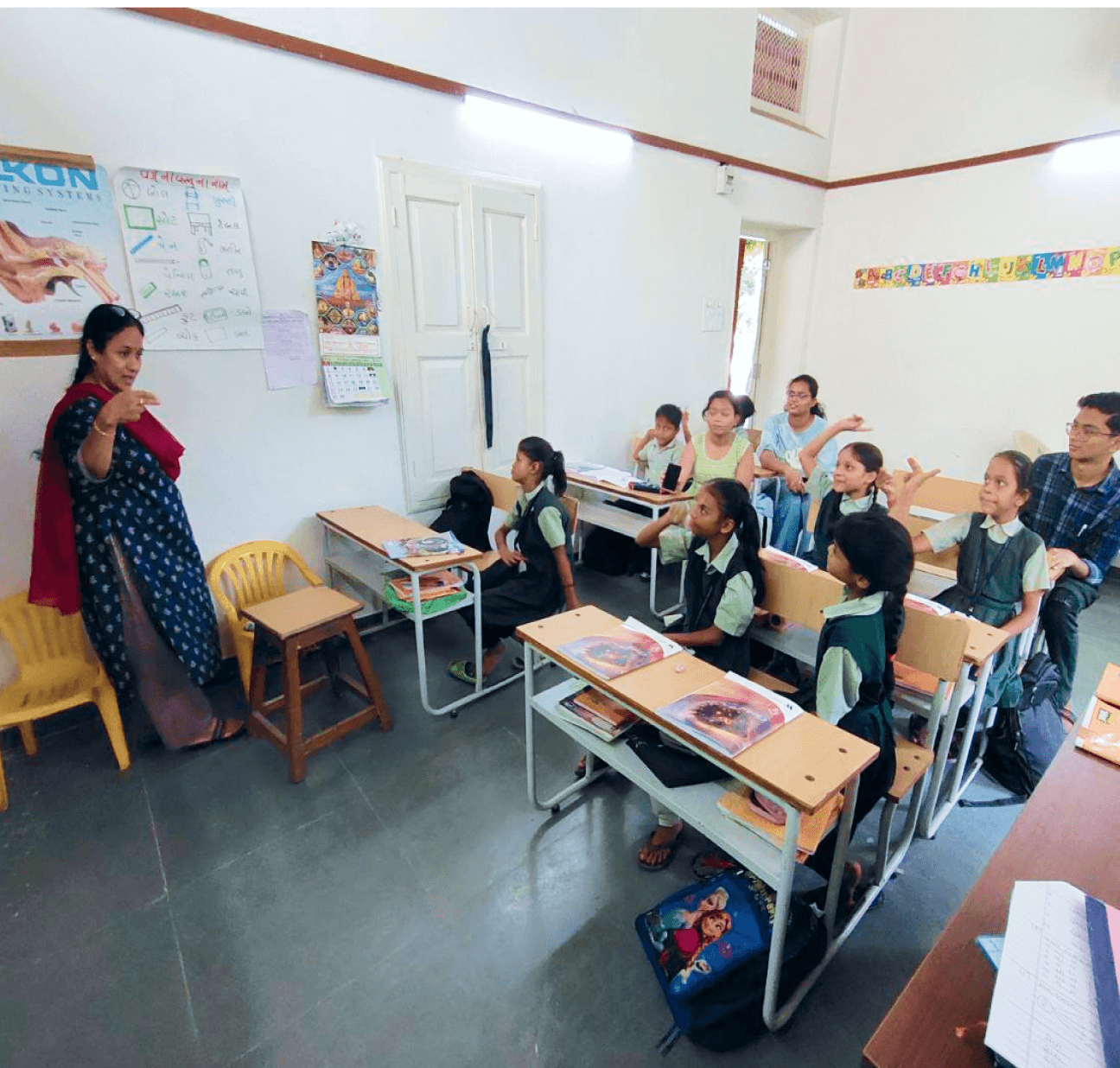
The need for structured ISL training, balanced social perception, parental involvement, and a clear objective to create an inclusive and effective communication system for the deaf community.
Insight's from User’s interview
Our primary research revealed some insights about the way of teaching ISL and the need of awareness about ISL.
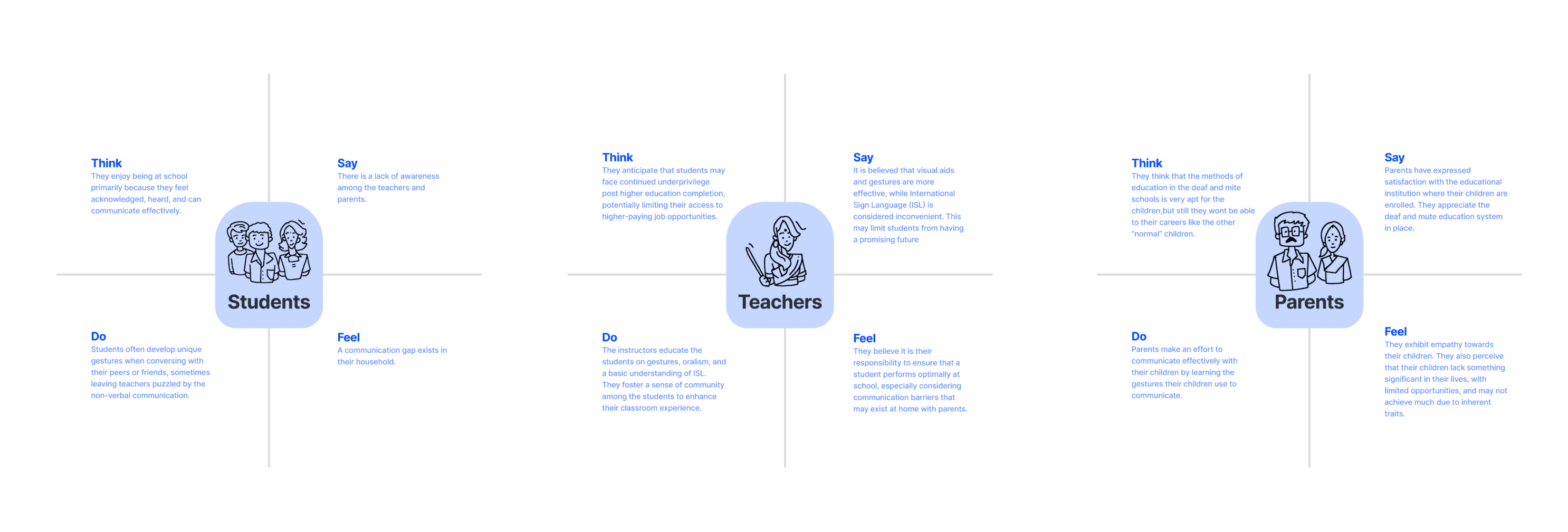
Empathy Mapping
Empathy Maps were developed to understand user’s needs, behaviors and challenges, focusing on students, teachers and parents.
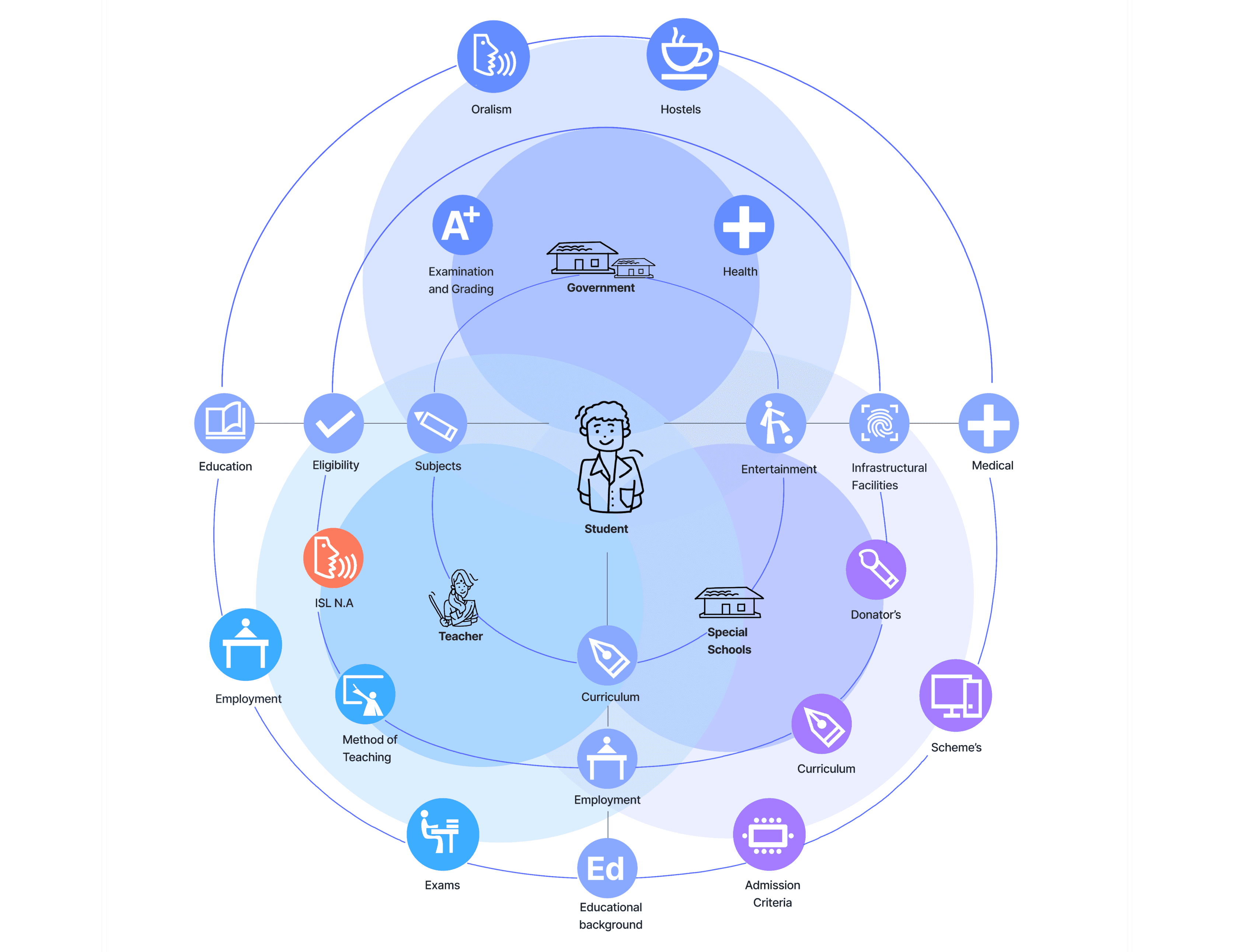
Ecosystem Mapping
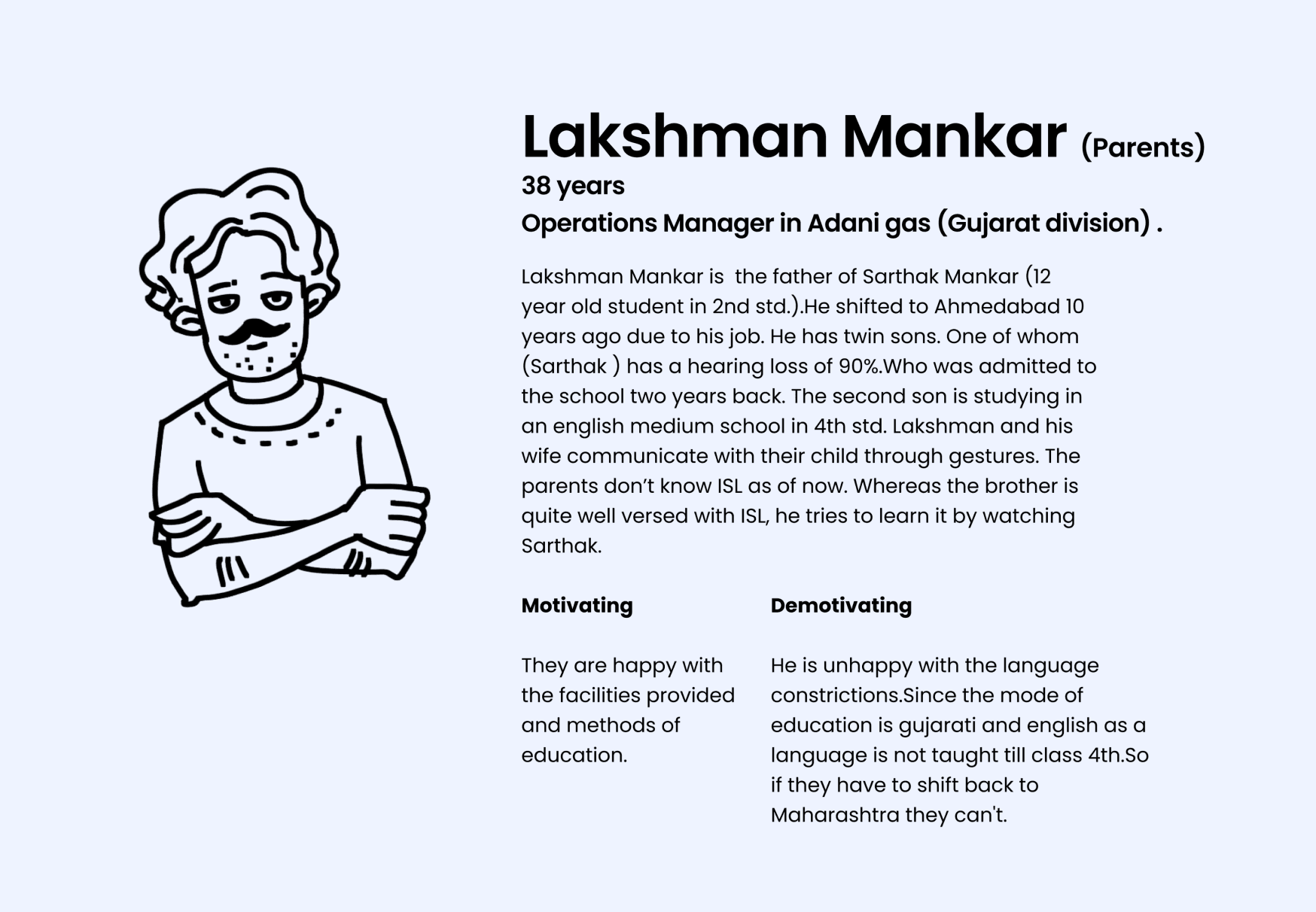
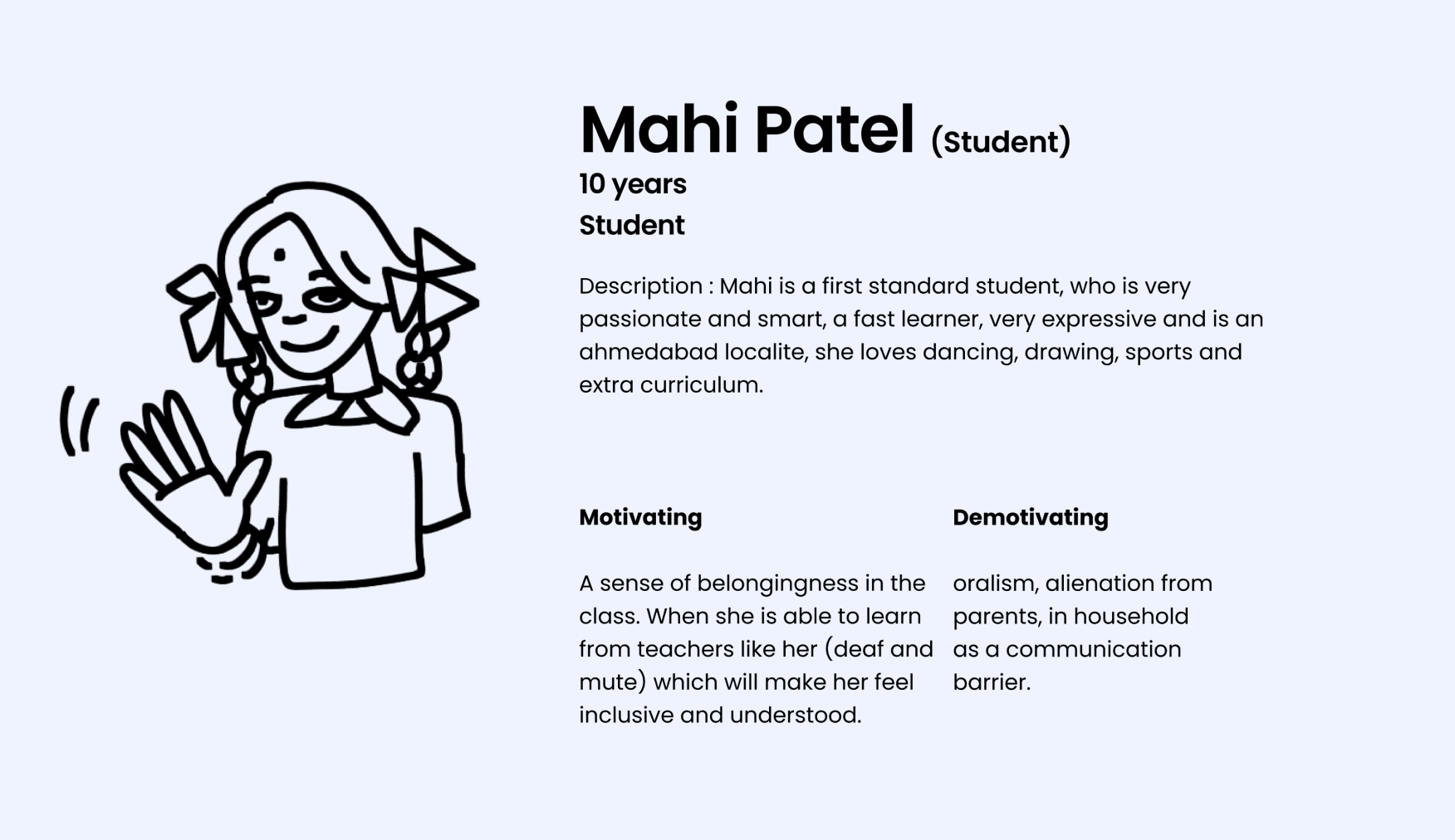
Persona’s Mapping
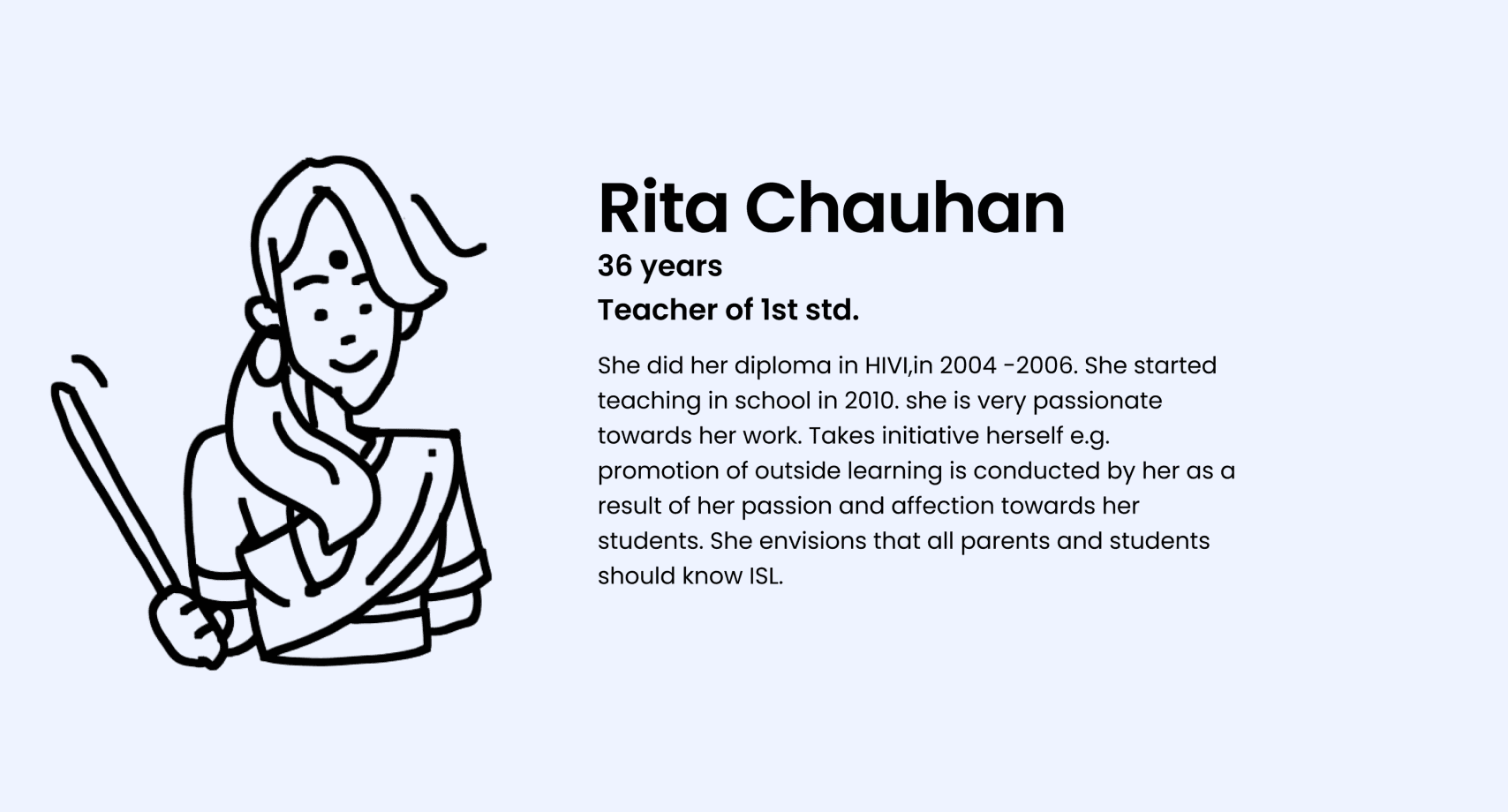
Persona’s Mapping
We communicated with three individuals, tried to understand them, and documented it here.
We communicated with three individuals, tried to understand them, and documented it here.
Following research and gap analysis, we defined a core issue and its corresponding solution. Our findings revealed a notable gap in the absence of a cohesive platform for the post-schooling deaf and mute community. There is a general lack of awareness surrounding communication possibilities with this group.
Understanding the need of Indian Sign Language (ISL) in education
Sanket
Sanket
इशारा, इंगित
इशारा, इंगित
संकेत
संकेत
Next Project
teenage engineering Packaging Design
Next Project
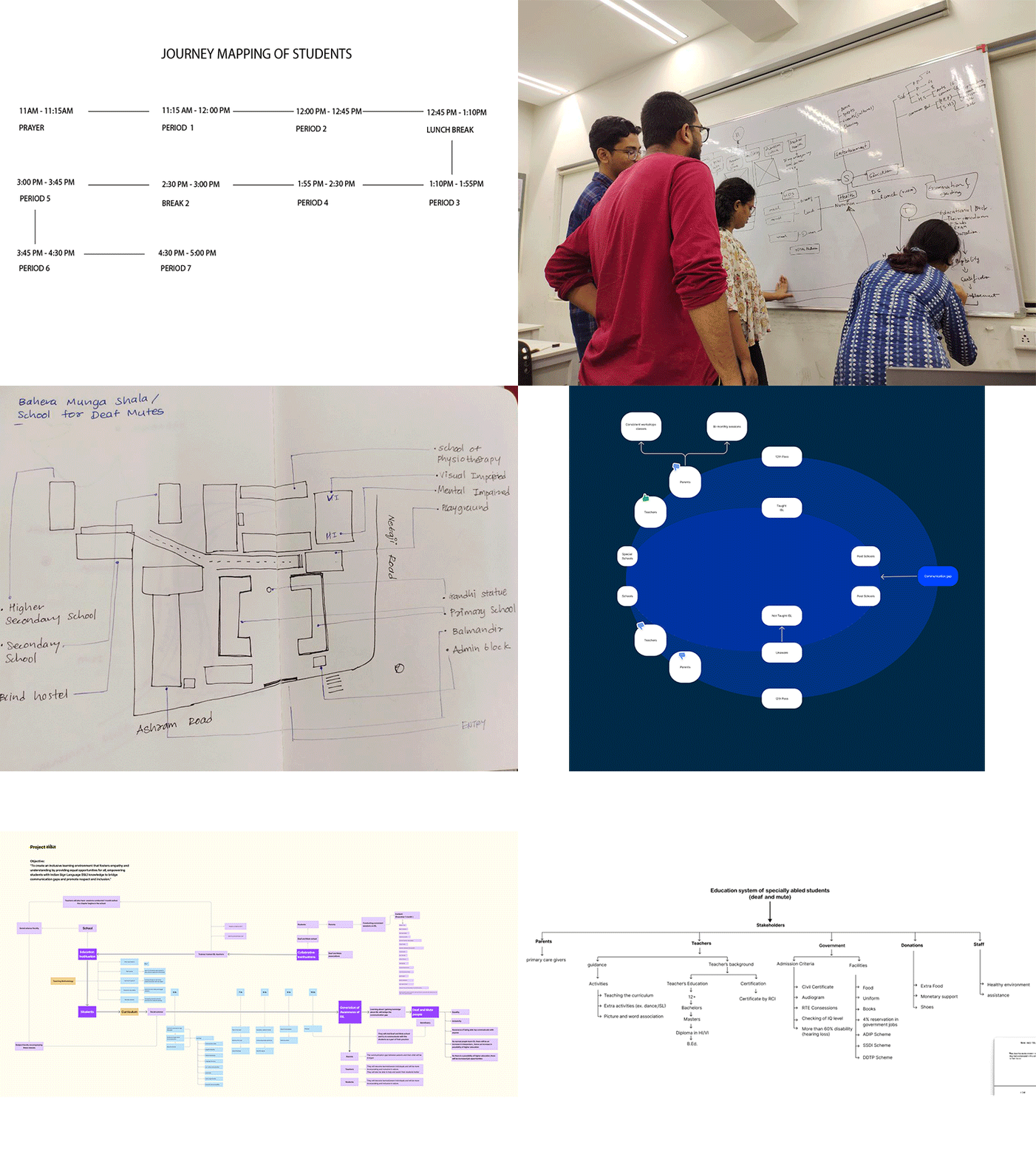
Behind the scenes
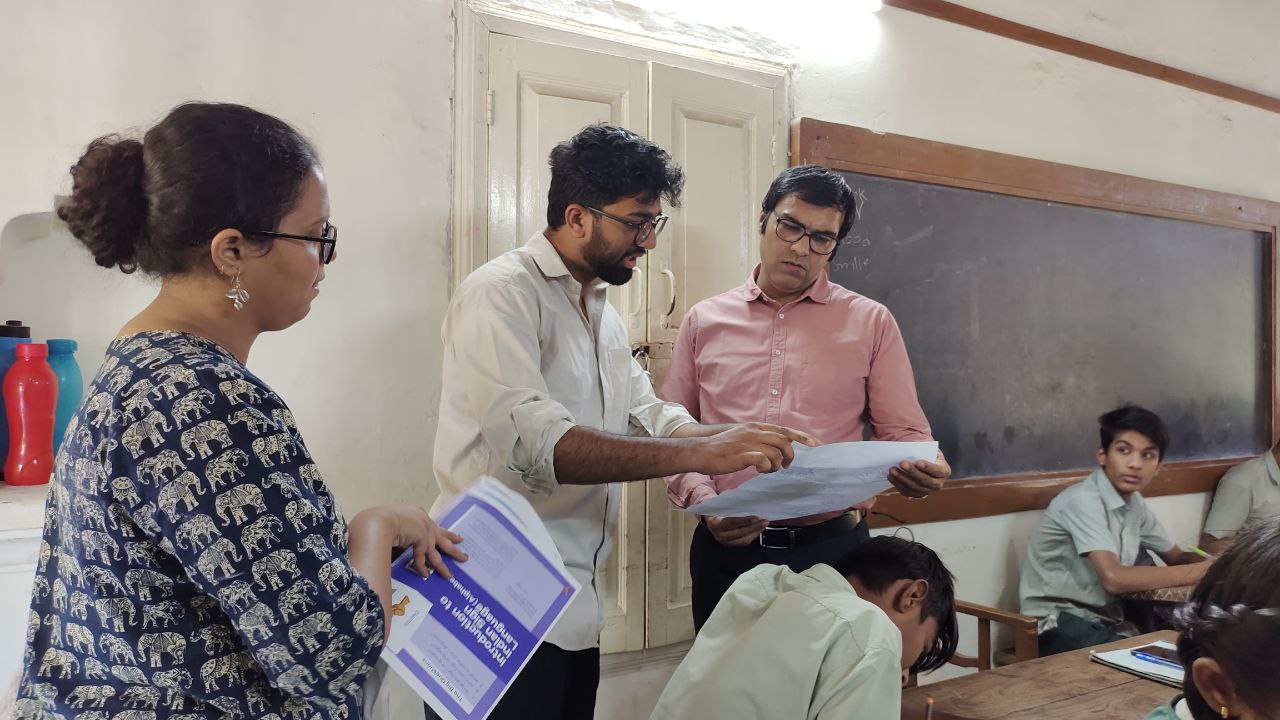
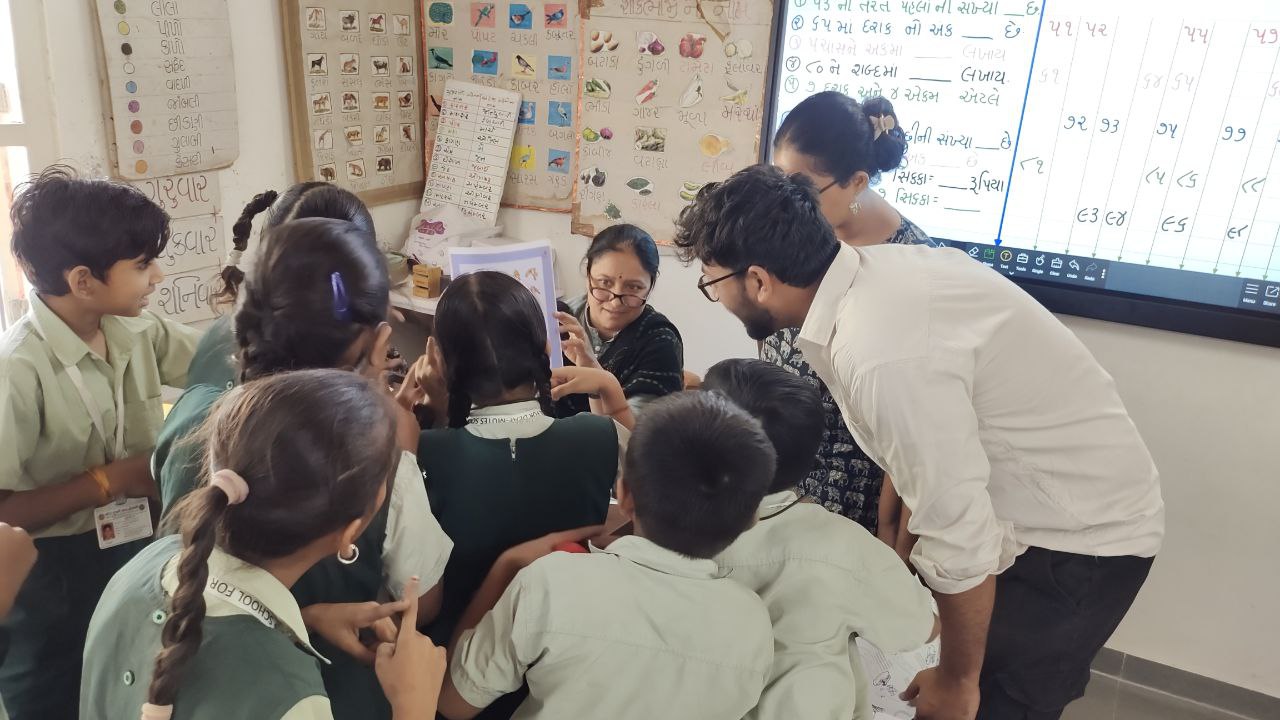
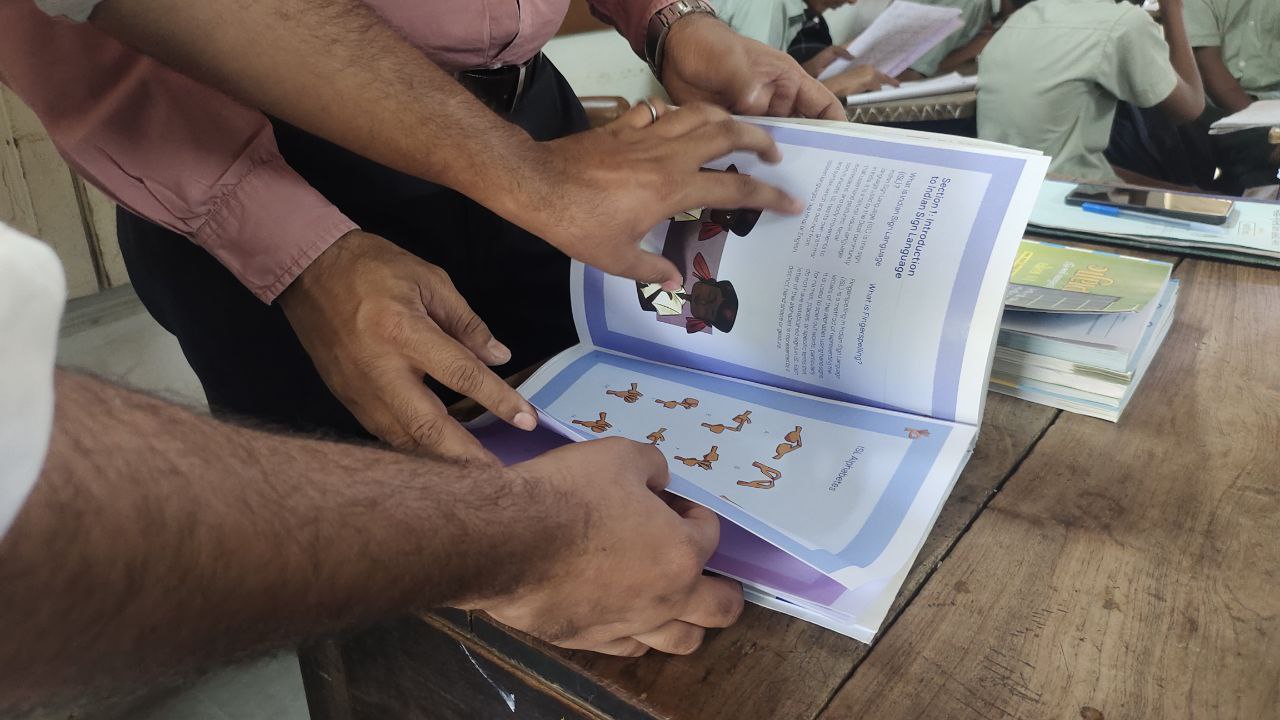
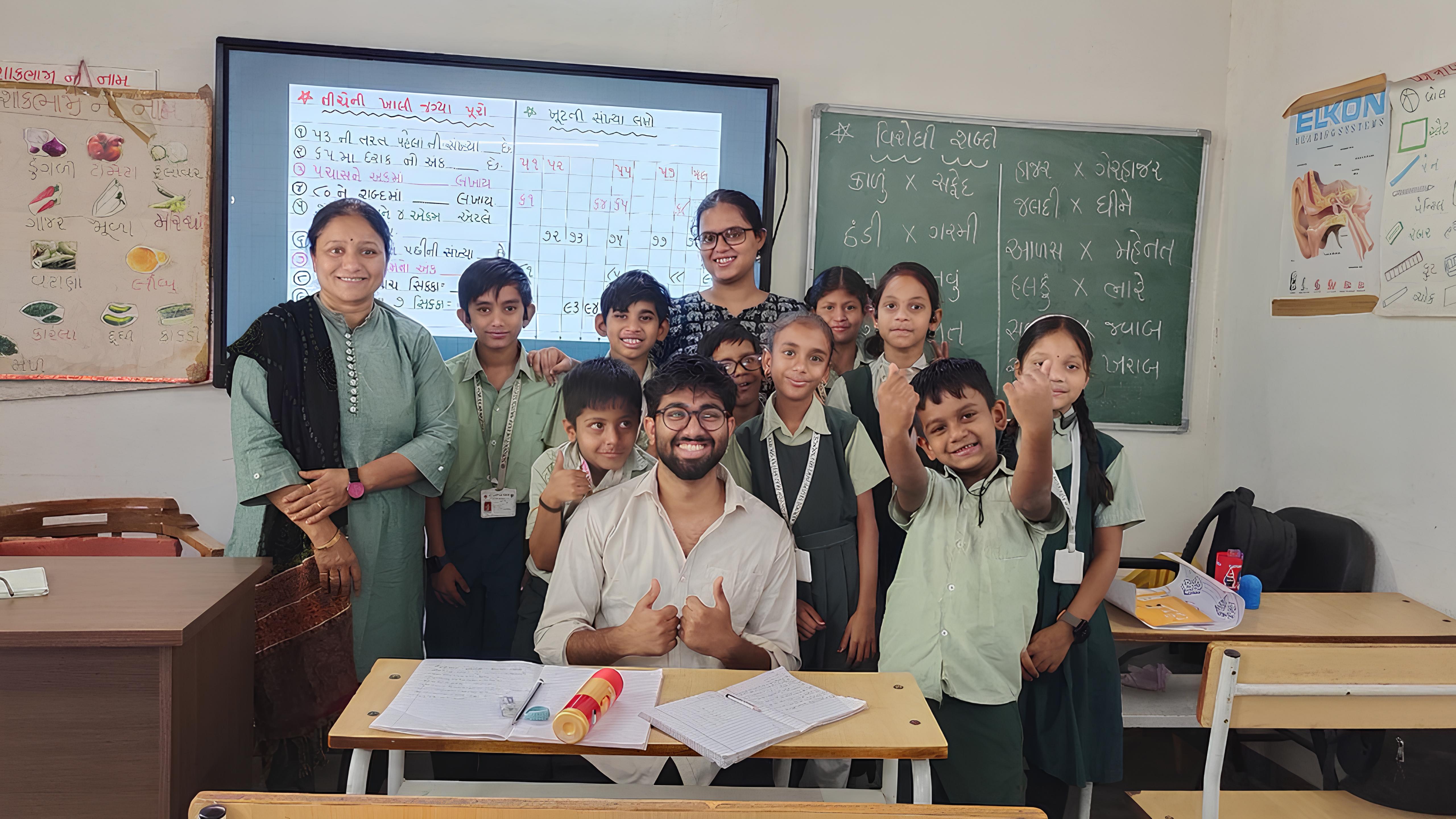
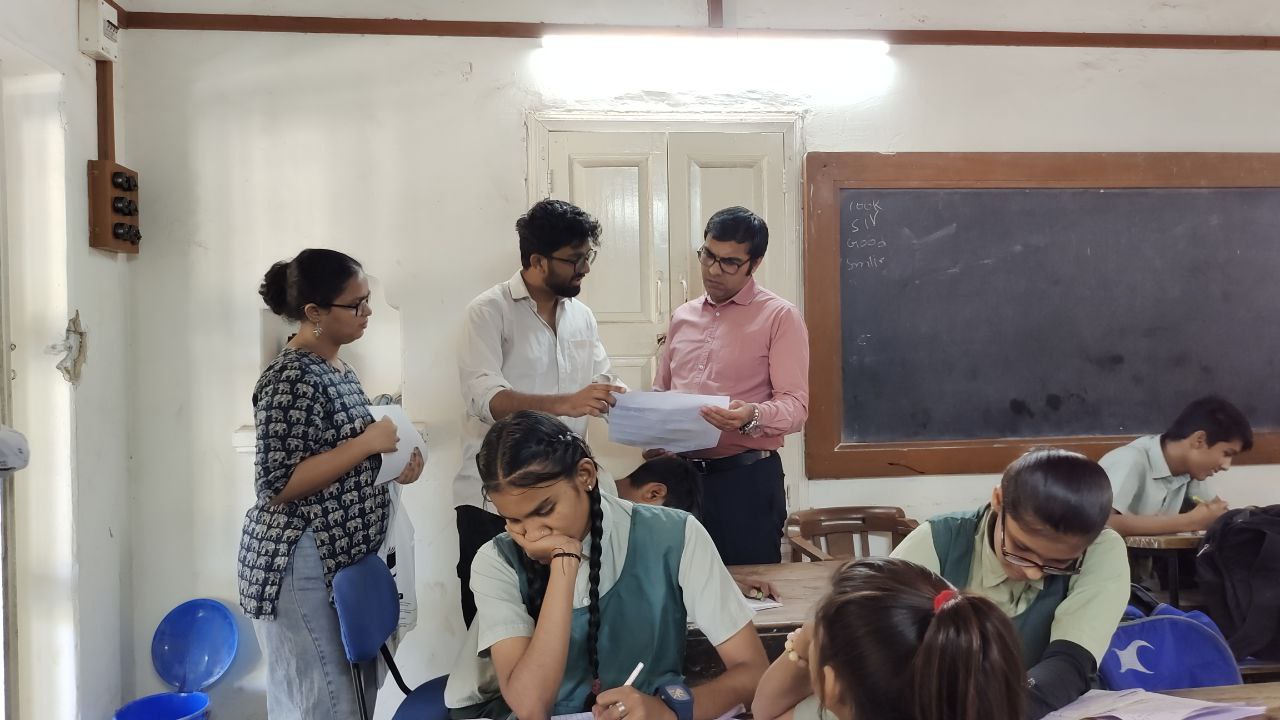
After developing our solution, we conducted testing at a school for mute and deaf students. We engaged in discussions with faculty members, observed classroom interactions, and gathered insights directly from the students. Their feedback provided valuable suggestions for refining our approach. While we intended to extend our testing to regular schools for broader evaluation, we faced challenges in obtaining the necessary permissions, limiting our ability to assess the solution in a mixed learning environment. However, the insights from the special school were instrumental in understanding the practical impact and potential improvements of our system.
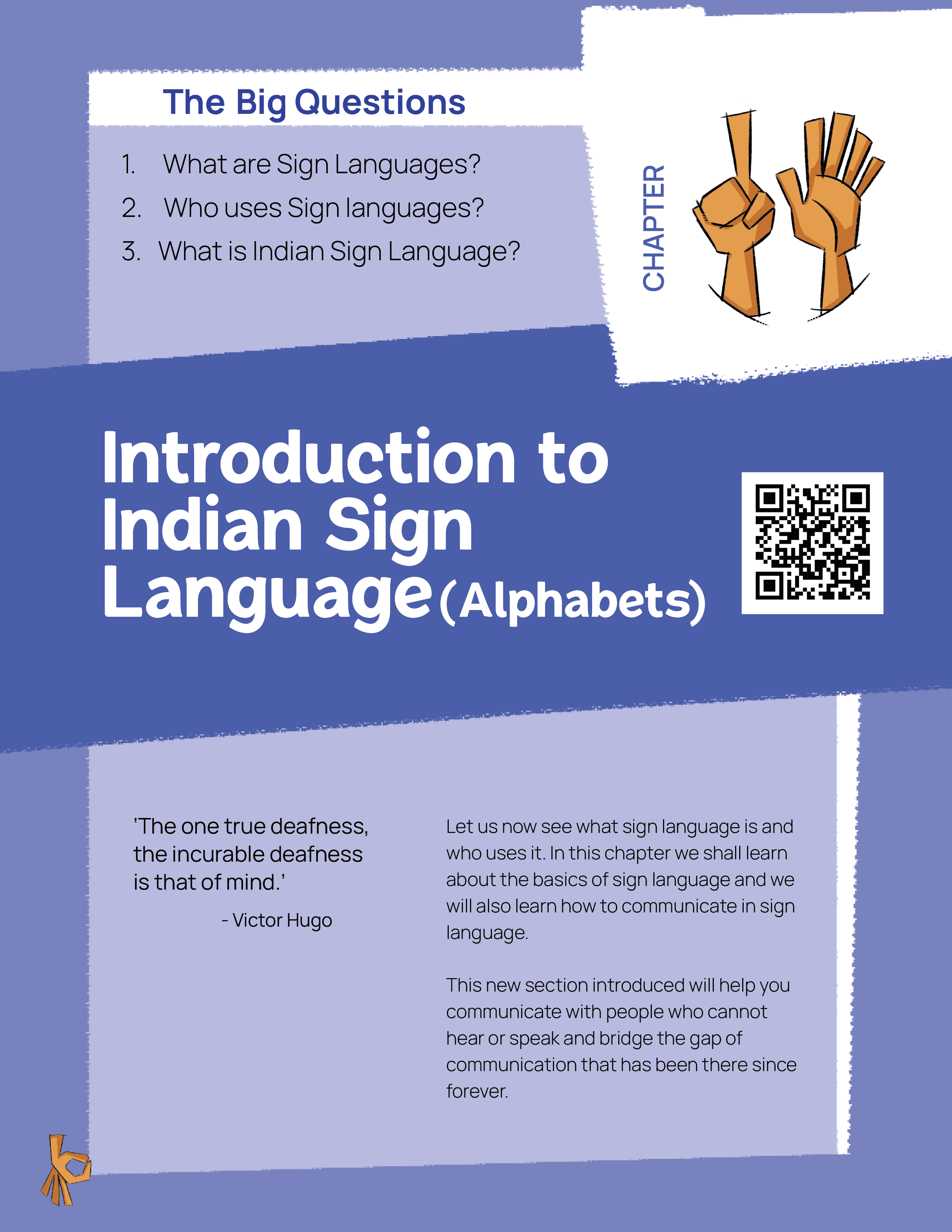
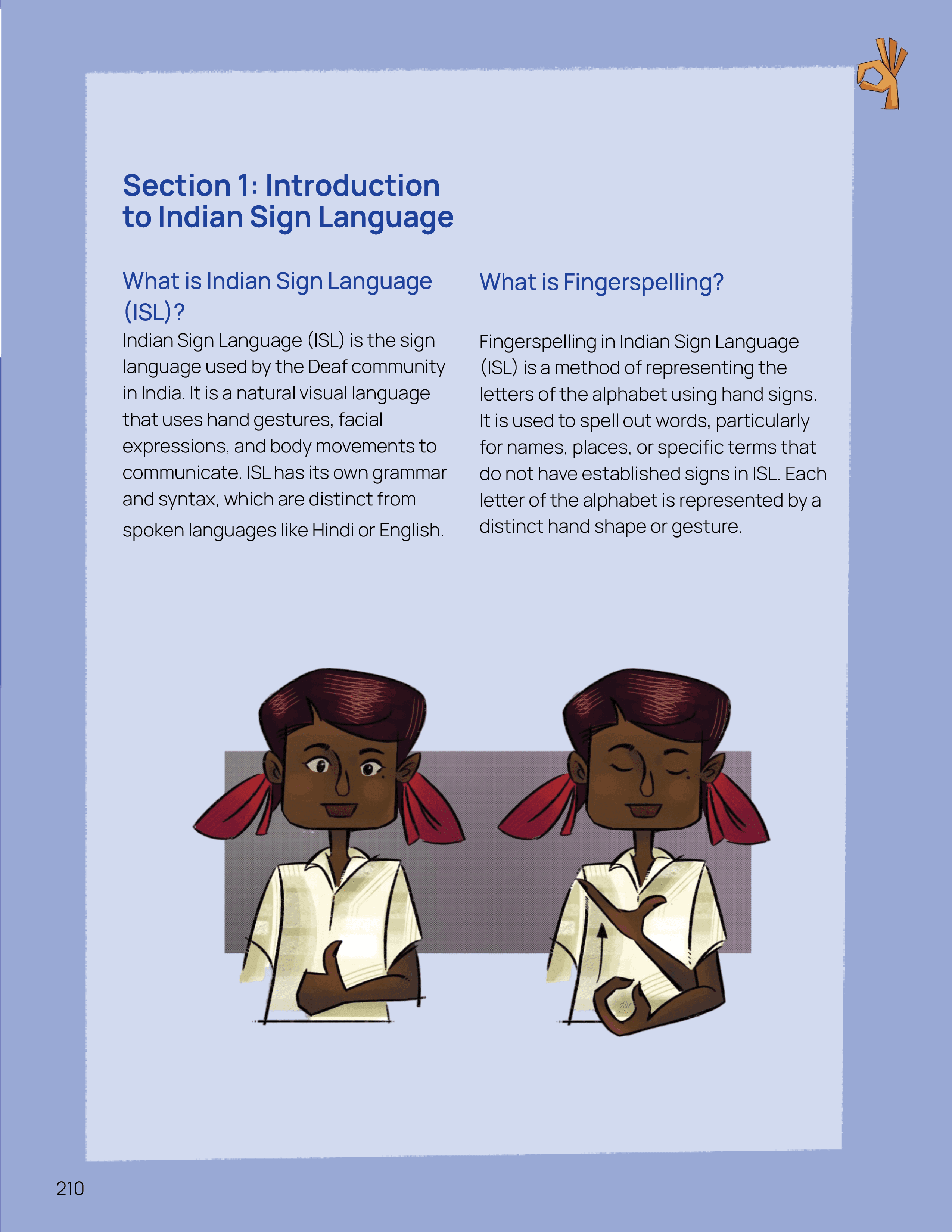
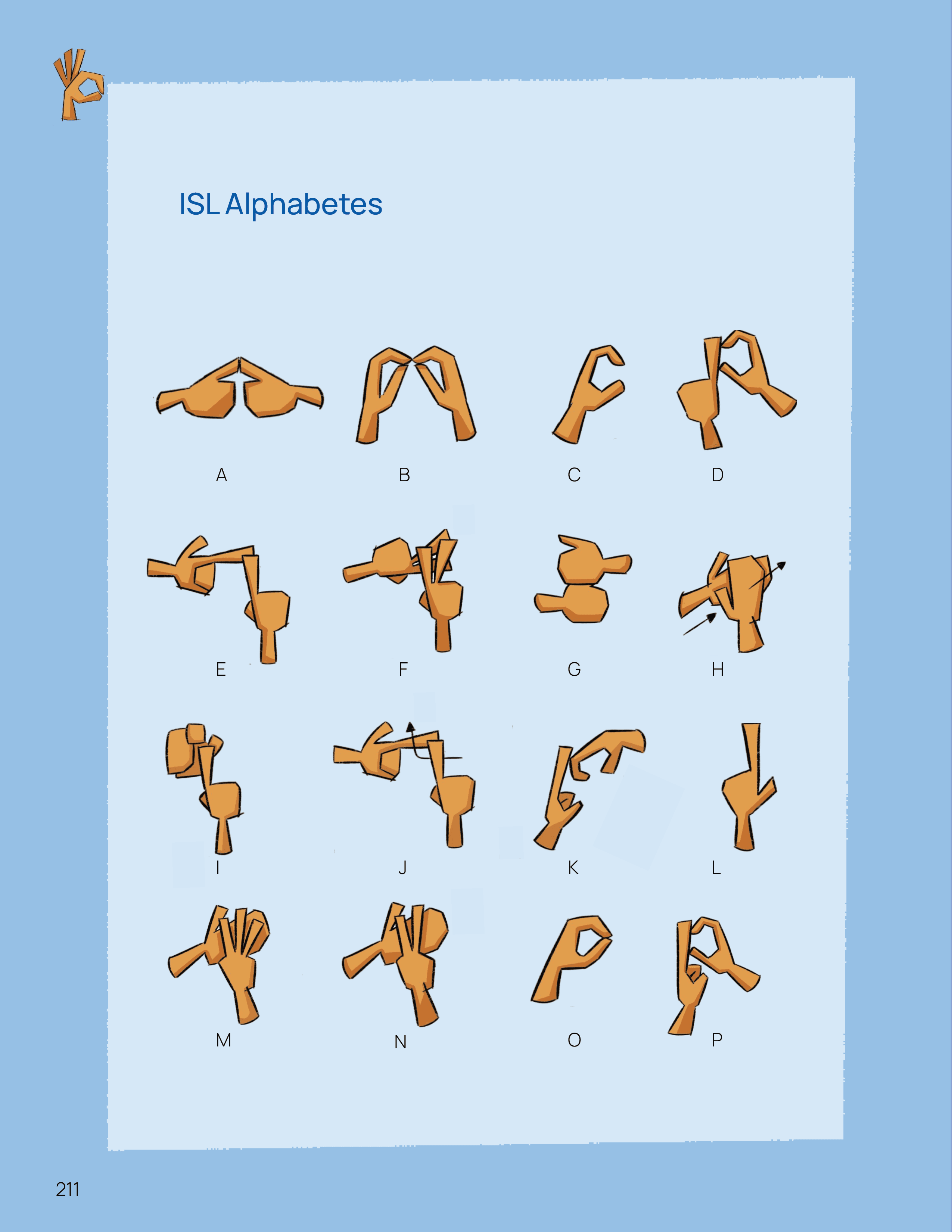
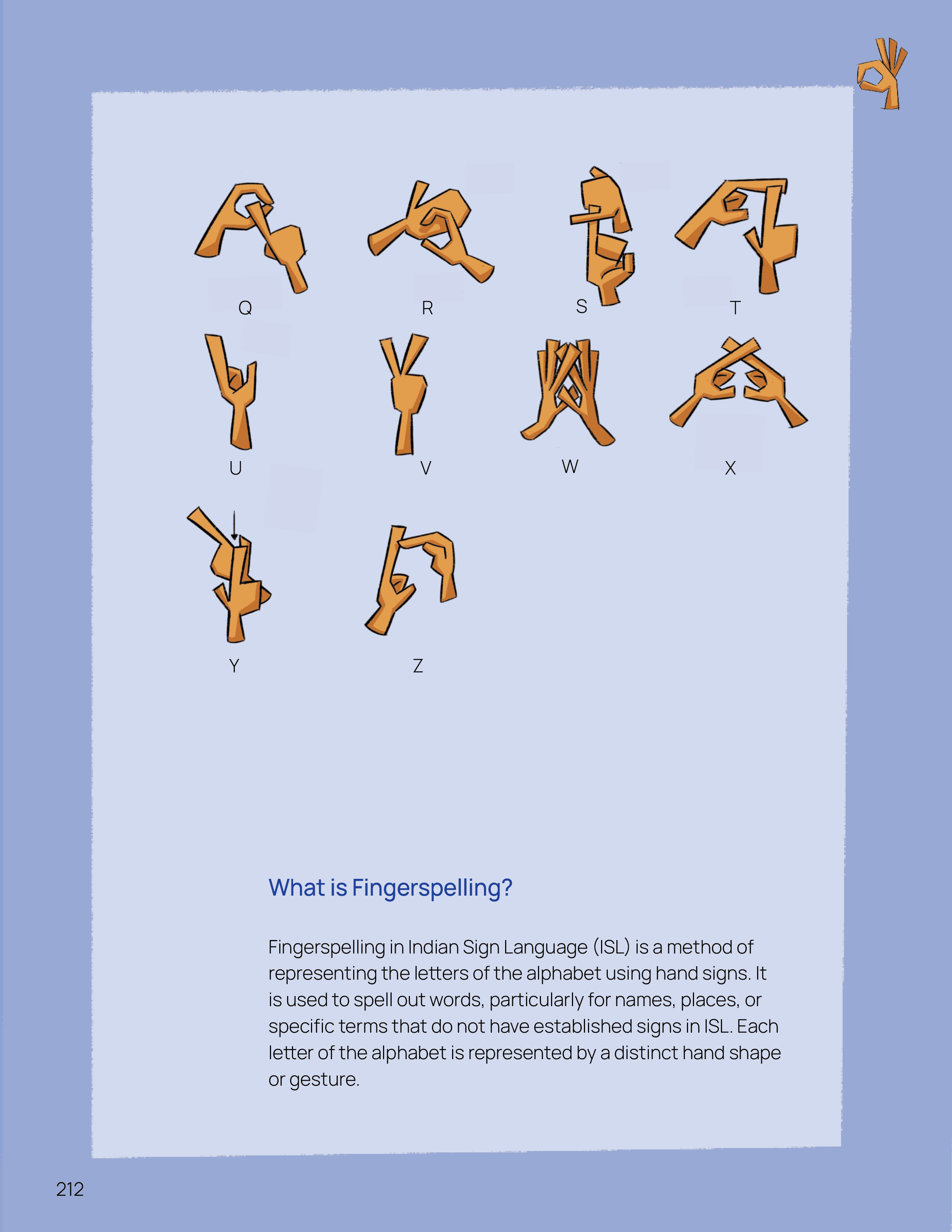
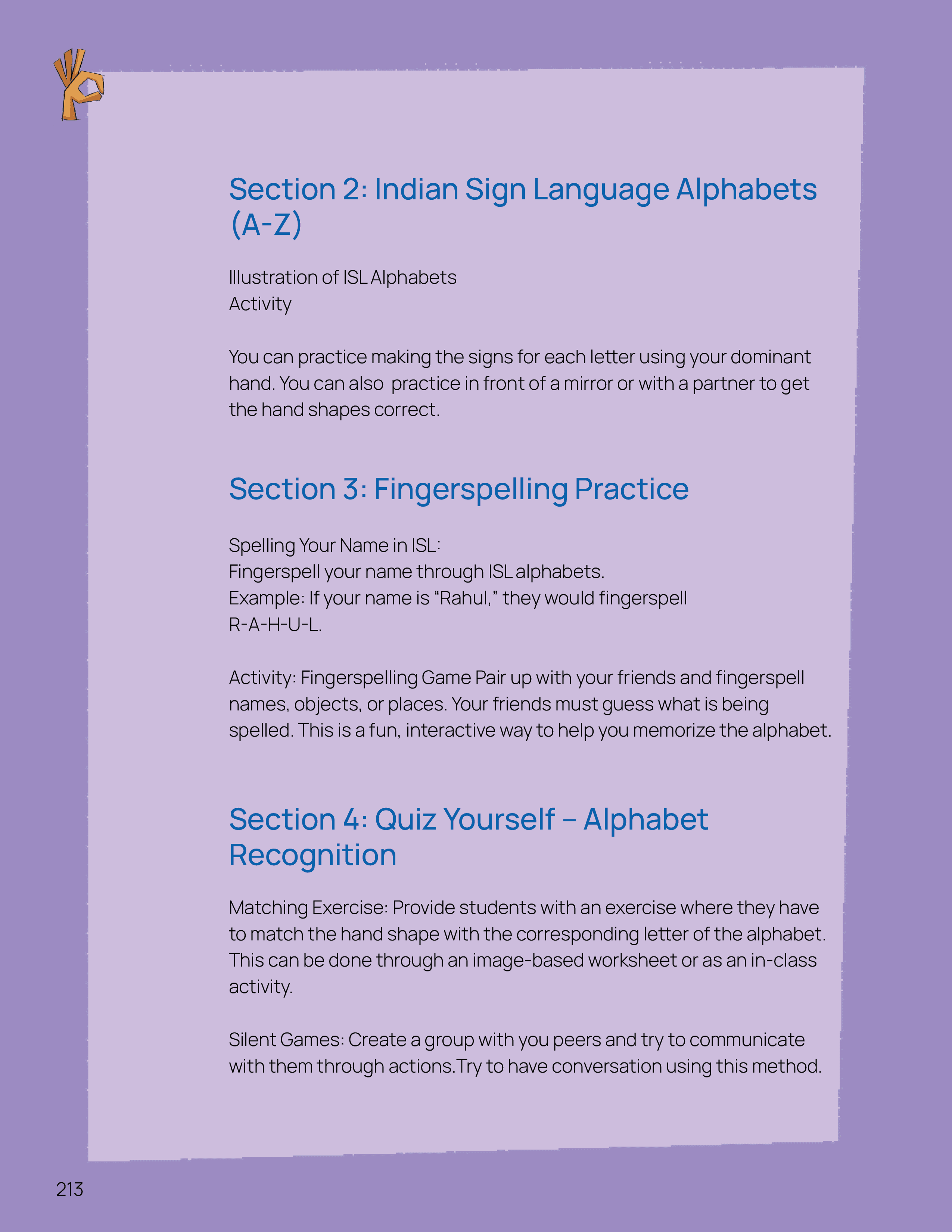
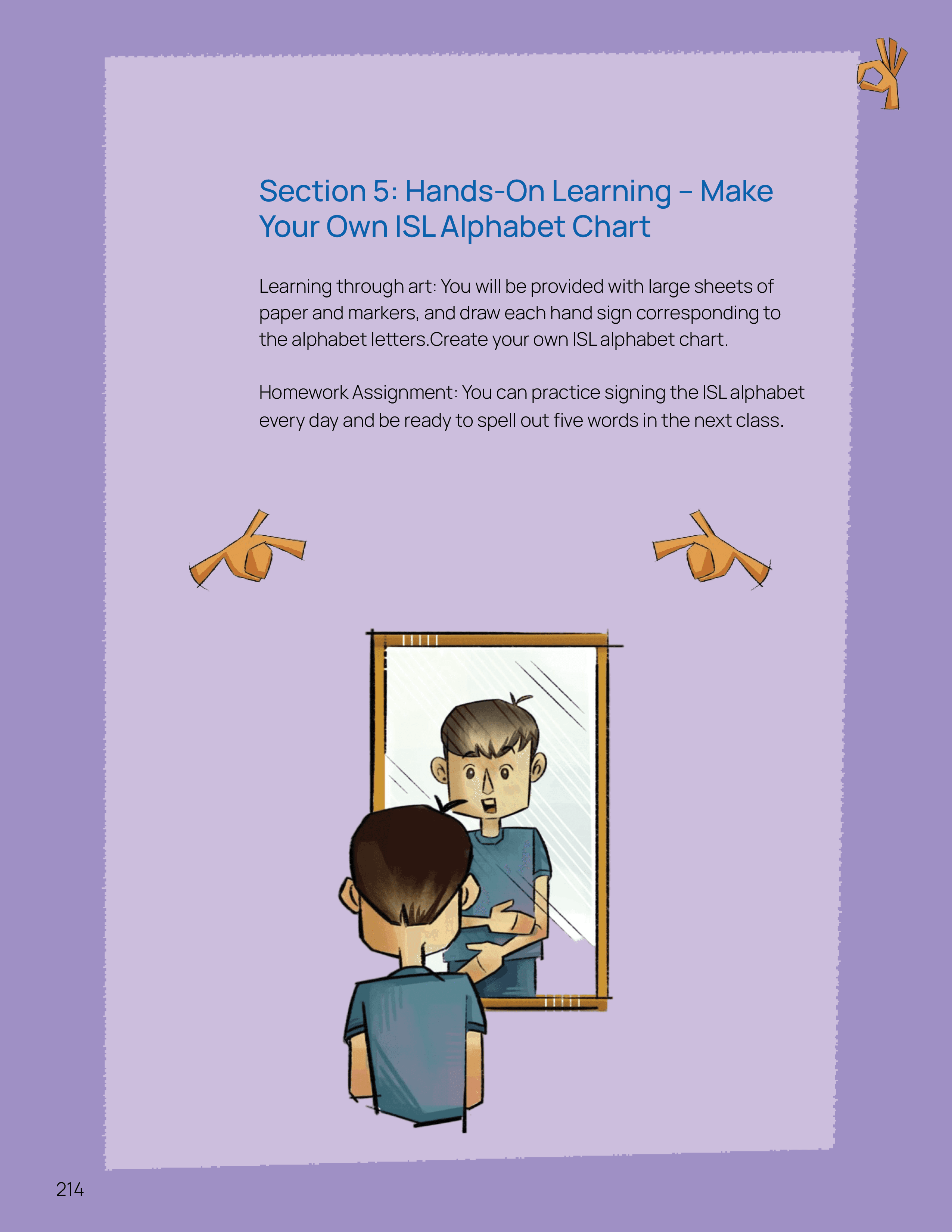
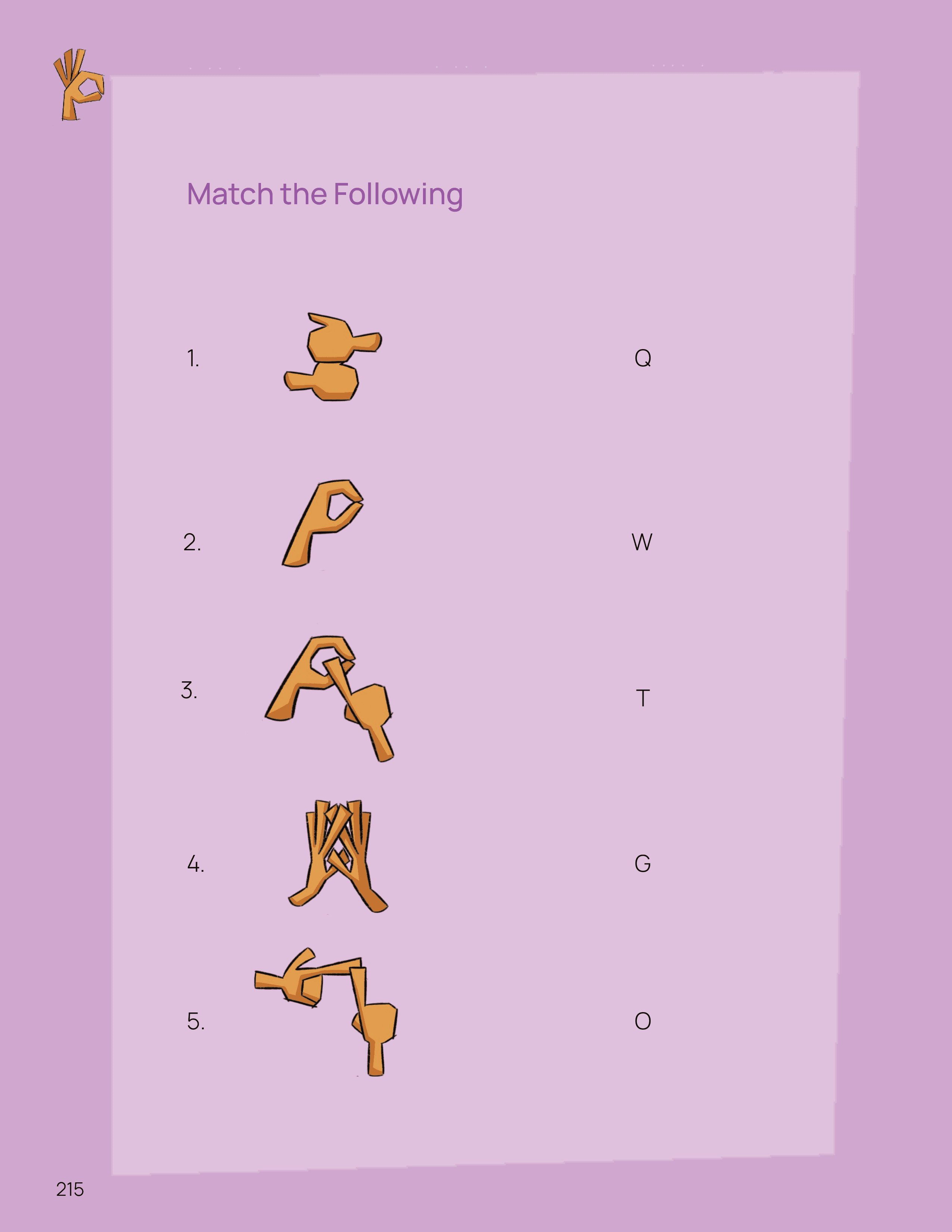
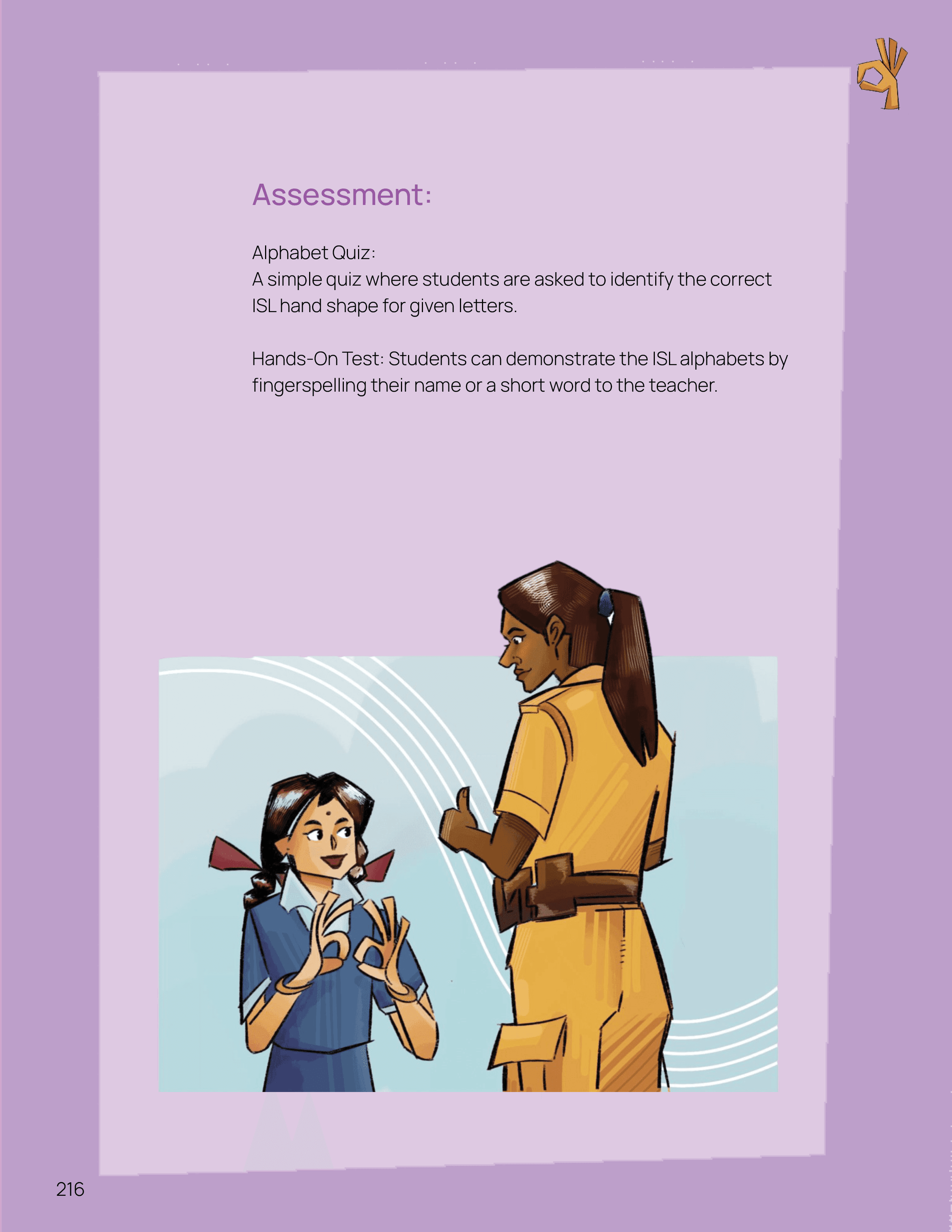
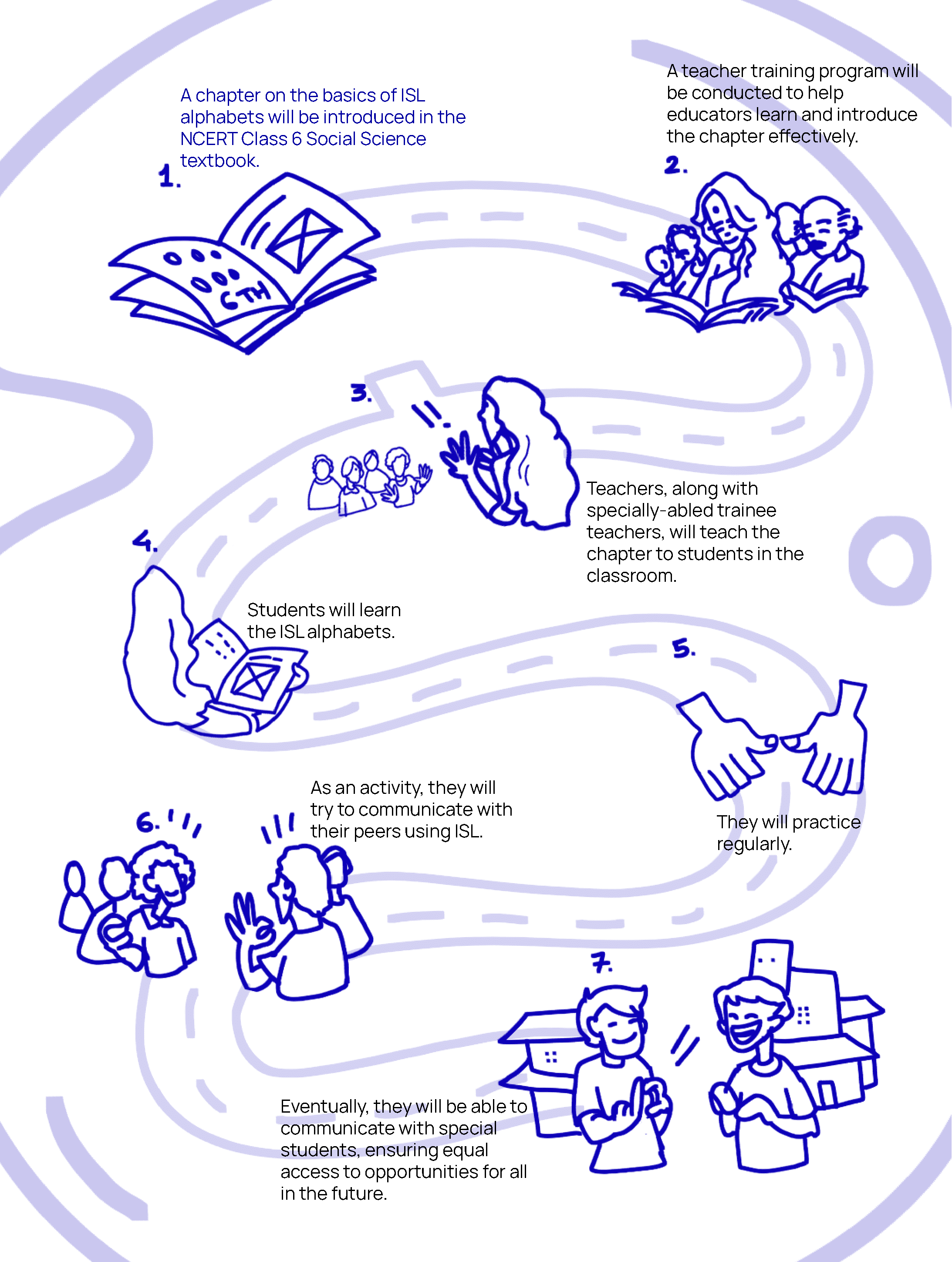
Storyboard, and
chapter design for Class 6.
"The one true deafness,
the incurable deafness is that of mind." - Victor Hugo
Tap to view all System maps here.
Storyboard, and chapter design for Class 6.
Behind the scenes
After developing our solution, we conducted testing at a school for mute and deaf students. We engaged in discussions with faculty members, observed classroom interactions, and gathered insights directly from the students. Their feedback provided valuable suggestions for refining our approach. While we intended to extend our testing to regular schools for broader evaluation, we faced challenges in obtaining the necessary permissions, limiting our ability to assess the solution in a mixed learning environment. However, the insights from the special school were instrumental in understanding the practical impact and potential improvements of our system.
Tap to view all System maps here.
Tap to view all System maps here.
Sanket is a chapter of Indian sign languages from 6th to 10th grade. It covers a range from basics to advanced levels, similar to learning other languages like Marathi and Hindi. This chapter will be included in the Social Science textbook by NCERT.
What is Sanket?
Sanket will facilitate communication between special needs students and their peers in school and the community. By embracing inclusivity and adopting a new perspective through ISL, we aim to provide equal opportunities to all individuals.
Why Sanket?
NCERT plays a crucial role in shaping India’s school curriculum, ensuring standardized education across CBSE schools. Integrating Indian Sign Language (ISL) into NCERT textbooks will provide nationwide accessibility, promoting inclusivity from an early age. Since NCERT books are widely used, this initiative can normalize ISL learning, create awareness, and help bridge the communication gap between deaf and hearing students in mainstream education.
Why NCERT?
"An effort that aims to create awareness and curiosity about ISL that will encompass inclusivity,empathy and provide a same platform for all."
Objective
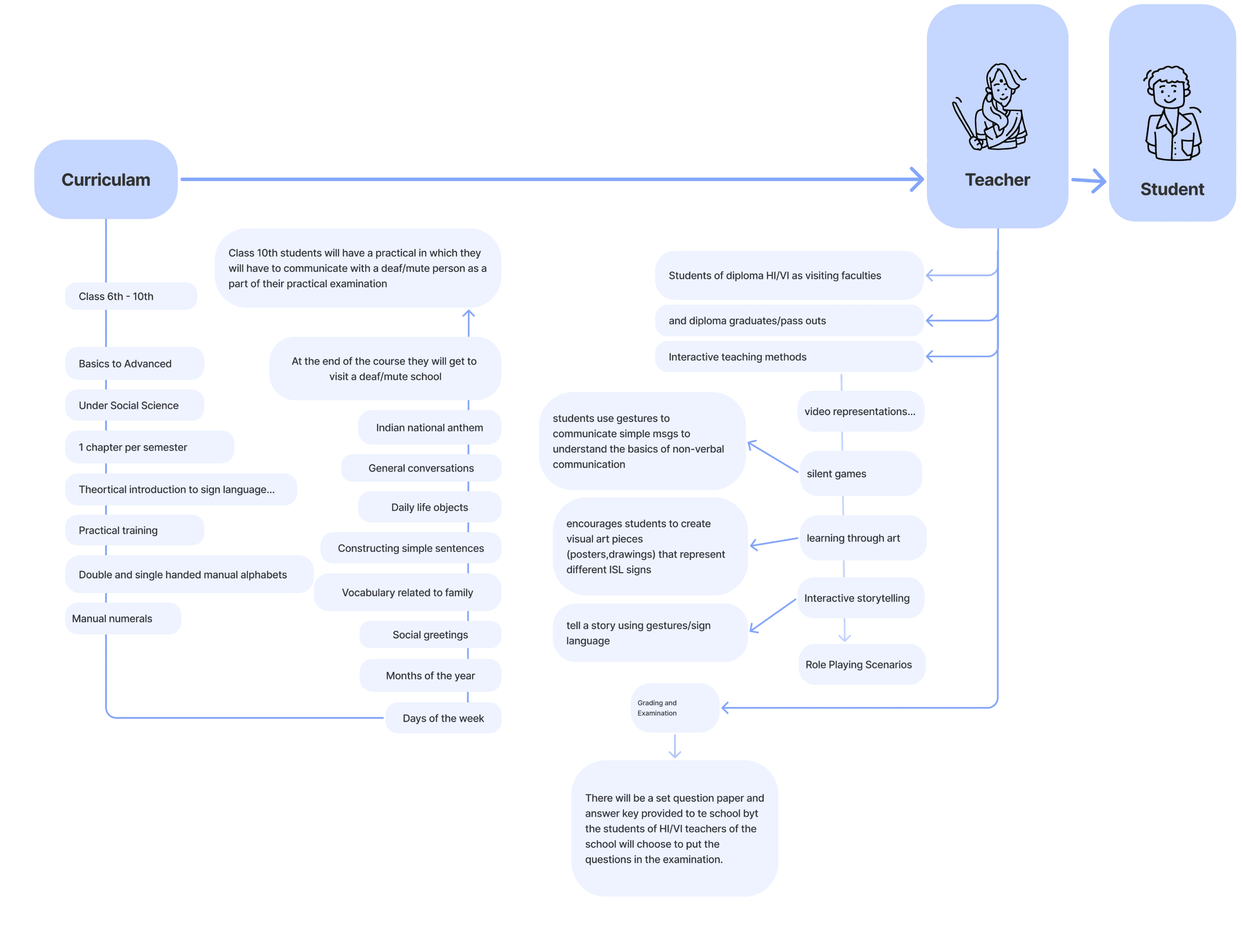
Affinity Mapping
Offered Ecosystem Mapping
teenage engineering Packaging Design
Next Project
Tools
Adobe Illustrator
Adobe Indesign
Adobe Photoshop
Project Guide
Dr. Anil Sinha
Prof. Saurabh Vyas
My Contribution
User research
Information Architecture
Curriculum Design
System Mapping
Stakeholder Engagement
Learnings
Participatory Reserach
Play as a team
System is the experience
Embrace the Interactive process
Steer through chaos
Around 63 million deaf individuals in India rely on sign language for communication, with over 6.3% of India’s population as same as the number of Marathi speakers. Despite this, Indian Sign Language (ISL) remains largely absent from mainstream education, creating significant communication barriers for the deaf and mute community. Schools for the deaf operate with unique challenges, where students primarily communicate through sign language, yet they often struggle to integrate into broader society due to a lack of awareness and understanding among the hearing population. Education plays a crucial role in shaping an inclusive society, yet most mainstream schools in India do not teach ISL, leaving deaf students isolated in communication.
Introduction
Focusing on a school for the deaf and mute in my system design research allows for a deeper understanding of inclusive and accessible design. These schools have unique communication needs, emphasizing visual, tactile, and non-verbal interactions. My personal connection growing up with my special needs brother sparked my interest in designing systems that foster accessibility, empathy, and inclusivity. This research aims to bridge communication gaps and create environments where everyone feels understood and included.
Why
The absence of Indian Sign Language (ISL) education in mainstream schools creates communication barriers, limiting inclusivity and accessibility for the deaf and mute community.
Problem
Statement
School of Mute and Deaf
Ashram Rd, opposite Times Of India, Muslim Society, Navrangpura, Ahmedabad, Gujarat 380014.
For interviews and surveys, we studied this school and conducted desk research to gain deeper insights.
We conducted user interviews with Anant Joshi(Chairman, Goa Association of the Deaf) and teachers, students to gain insights on this topic.
Time | 4 Weeks
2024
Team | 4 People
The need for structured ISL training, balanced social perception, parental involvement, and a clear objective to create an inclusive and effective communication system for the deaf community.
Insight's from User’s interview
Our primary research revealed some insights about the way of teaching ISL and the need of awareness about ISL.
Persona’s Mapping
We communicated with three individuals, tried to understand them, and documented it here.
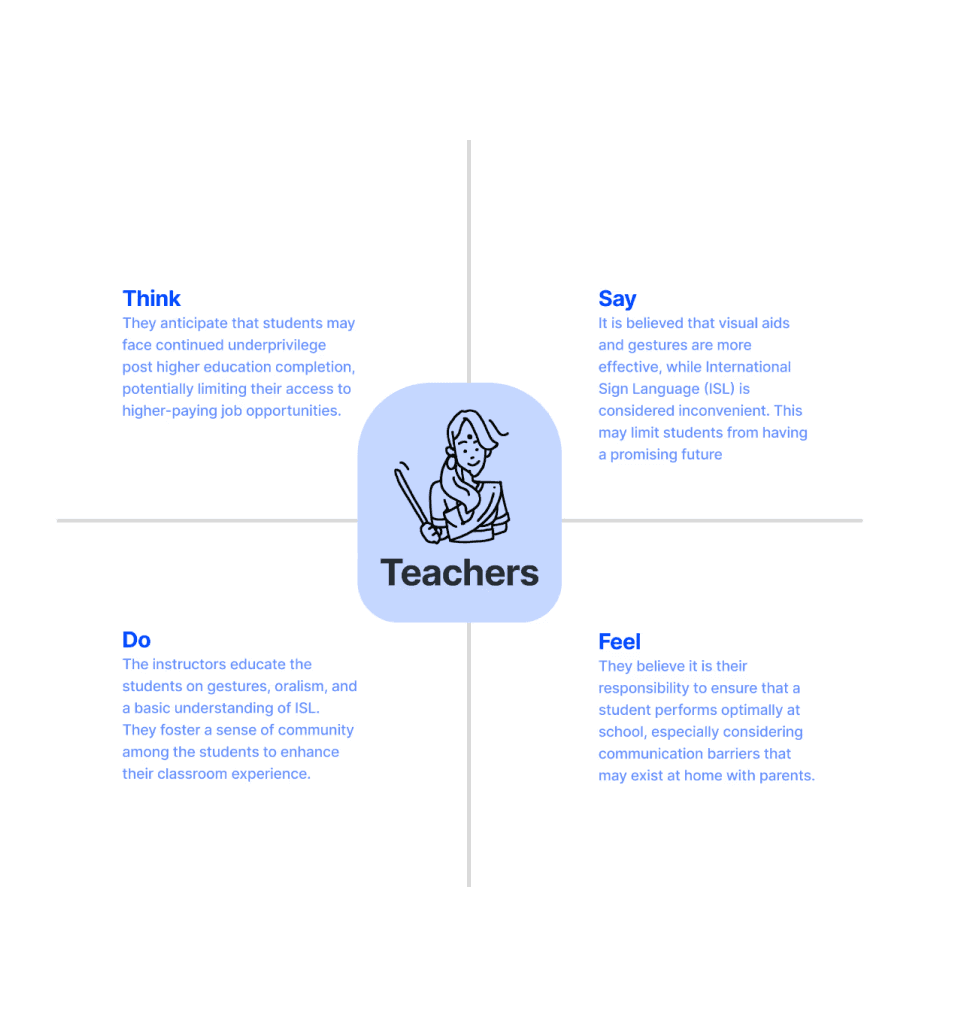
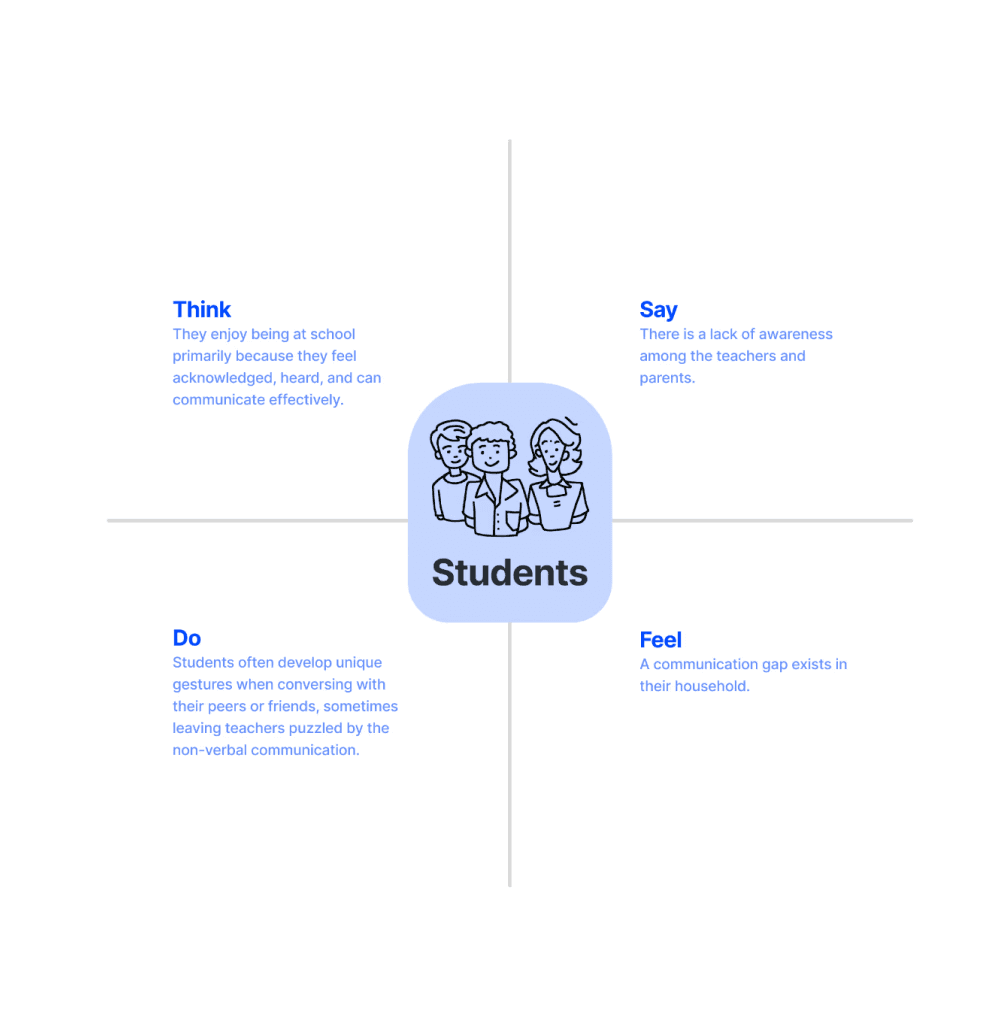
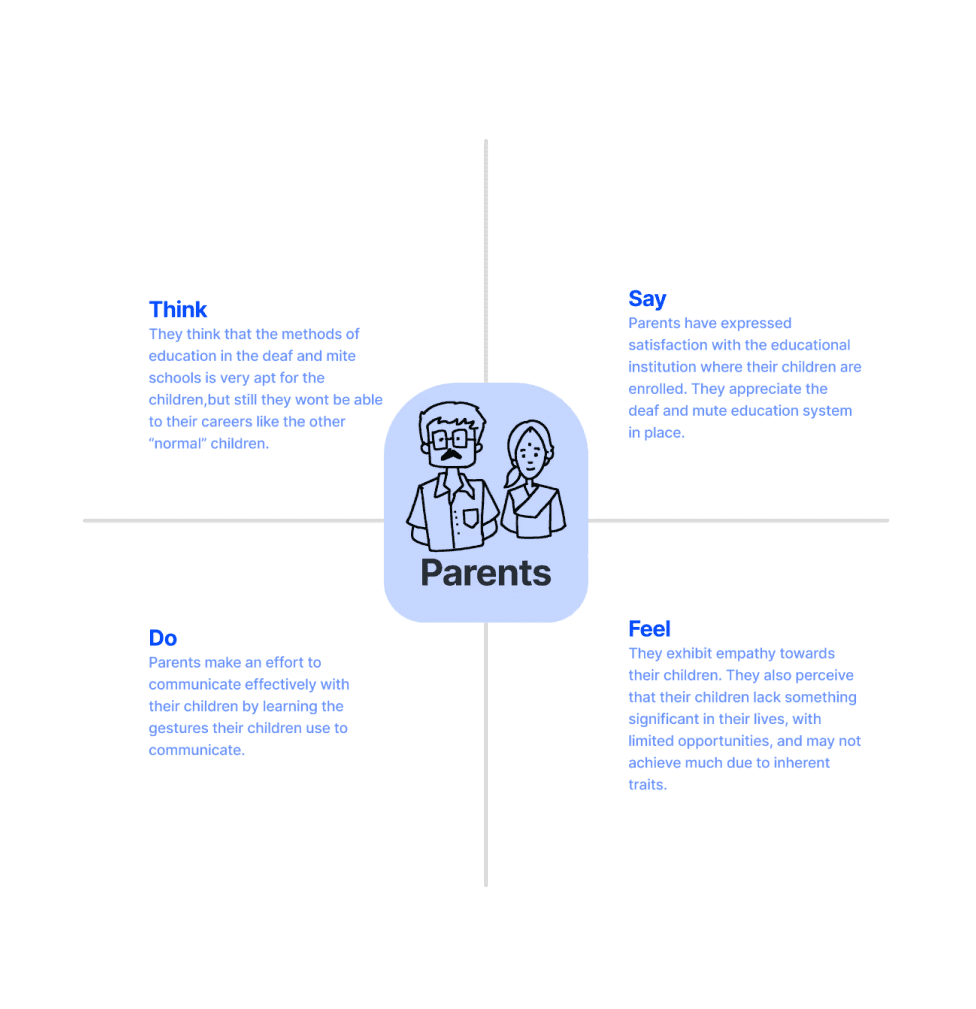
Empathy Mapping
Empathy Maps were developed to understand user’s needs, behaviors and challenges, focusing on students, teachers and parents.
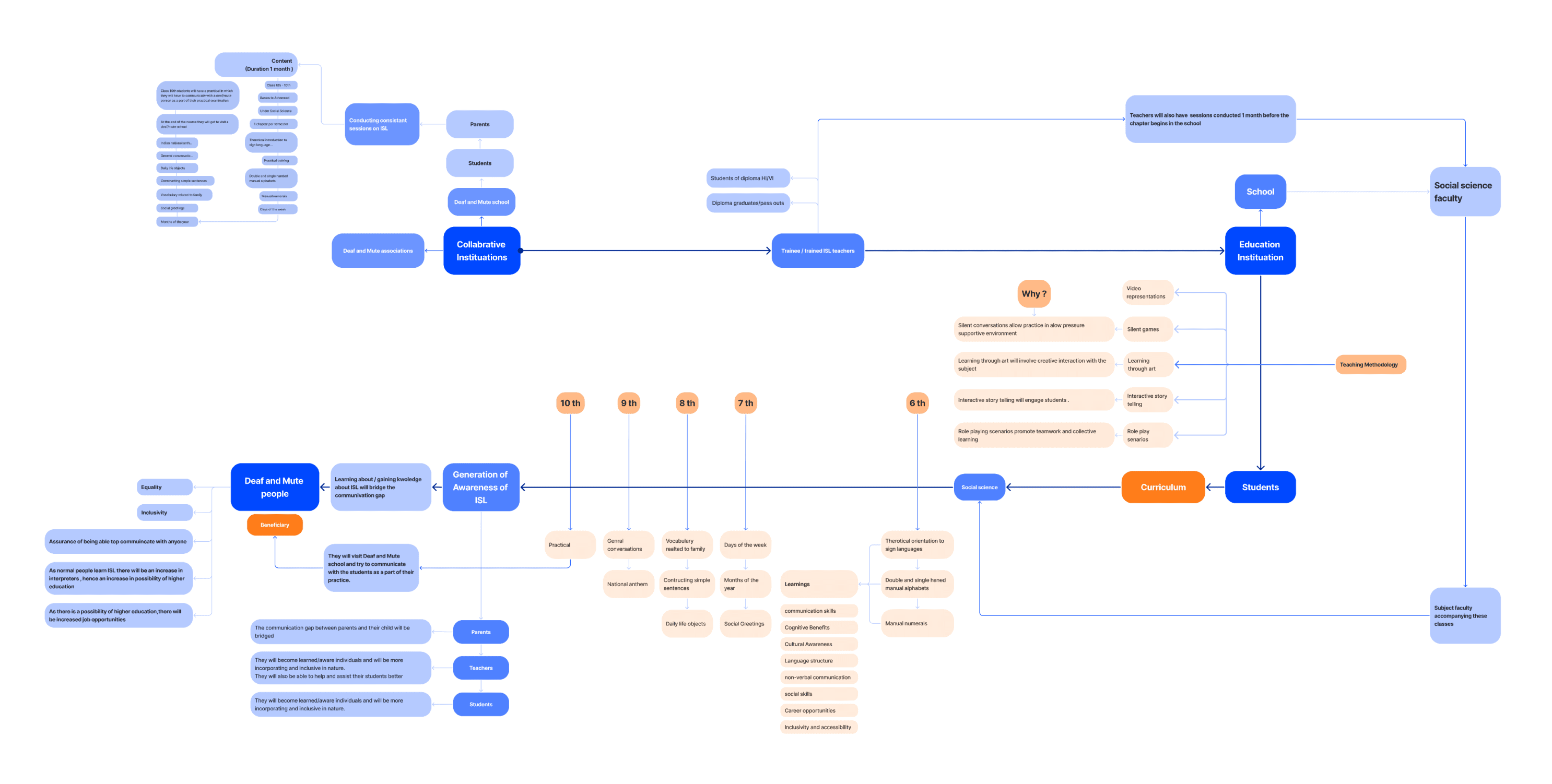
Ecosystem Mapping
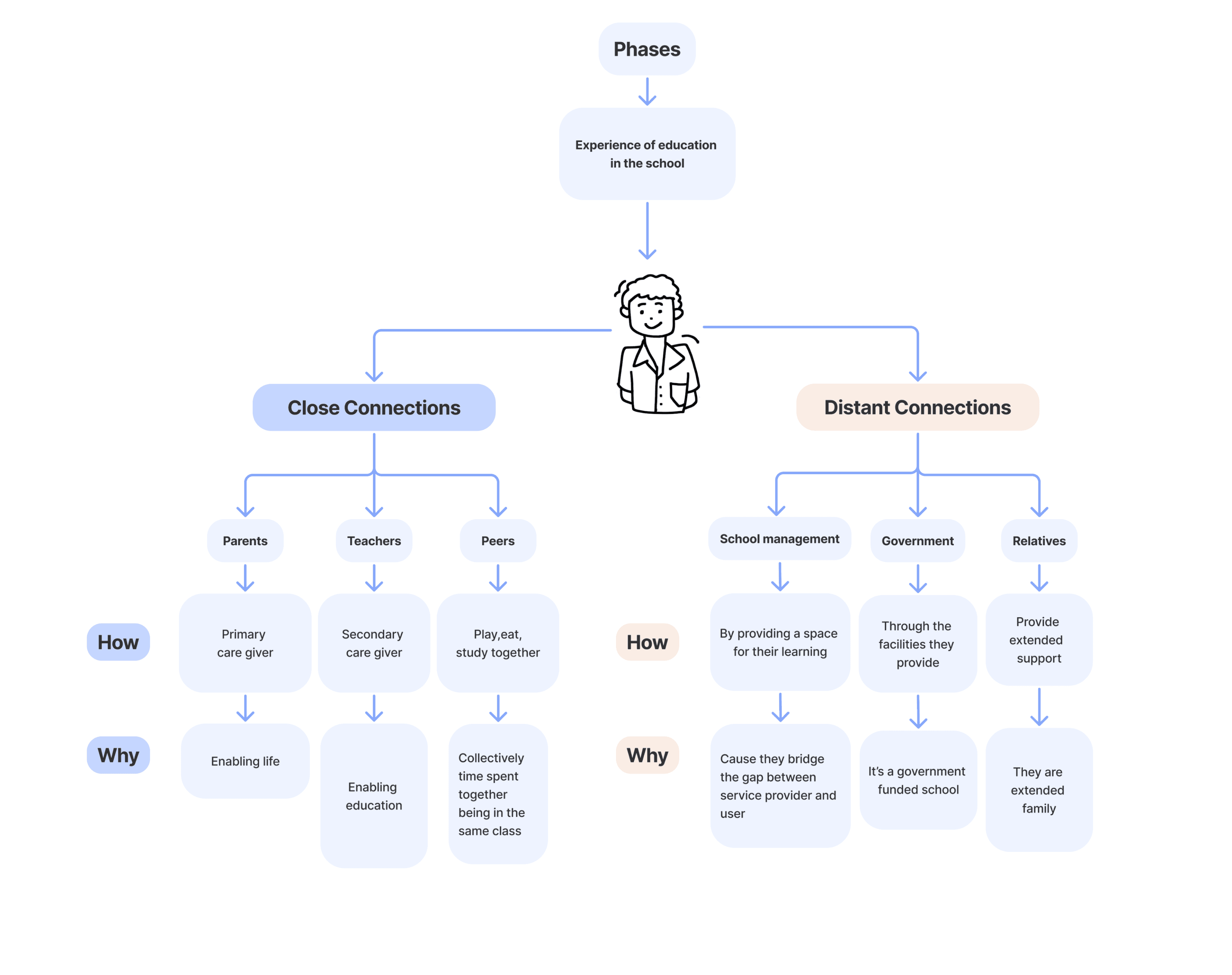
User Insight Mapping
Following research and gap analysis, we defined a core issue and its corresponding solution. Our findings revealed a notable gap in the absence of a cohesive platform for the post-schooling deaf and mute community. There is a general lack of awareness surrounding communication possibilities with this group.
Understanding the need of Indian Sign Language (ISL) in education
Introducing,
Sanket
इशारा, इंगित
संकेत
Sanket is a chapter of Indian sign languages from 6th to 10th grade. It covers a range from basics to advanced levels, similar to learning other languages like Marathi and Hindi. This chapter will be included in the Social Science textbook by NCERT.
What is Sanket?
Sanket will facilitate communication between special needs students and their peers in school and the community. By embracing inclusivity and adopting a new perspective through ISL, we aim to provide equal opportunities to all individuals.
Why Sanket?
NCERT plays a crucial role in shaping India’s school curriculum, ensuring standardized education across CBSE schools. Integrating Indian Sign Language (ISL) into NCERT textbooks will provide nationwide accessibility, promoting inclusivity from an early age. Since NCERT books are widely used, this initiative can normalize ISL learning, create awareness, and help bridge the communication gap between deaf and hearing students in mainstream education.
Why NCERT?
"An effort that aims to create awareness and curiosity about ISL that will encompass inclusivity,empathy and provide a same platform for all."
Objective
Affinity Mapping
Offered Ecosystem Mapping
Project Guide
Dr. Anil Sinha
Prof. Saurabh Vyas
My Contribution
User research
Information Architecture
Curriculum Design
System Mapping
Stakeholder Engagement
Learnings
Participatory Reserach
Play as a team
System is the experience
Embrace the Interactive process
Steer through chaos
Tools
Adobe Illustrator
Adobe Indesign
Adobe Photoshop
Around 63 million deaf individuals in India rely on sign language for communication, with over 6.3% of India’s population as same as the number of Marathi speakers. Despite this, Indian Sign Language (ISL) remains largely absent from mainstream education, creating significant communication barriers for the deaf and mute community. Schools for the deaf operate with unique challenges, where students primarily communicate through sign language, yet they often struggle to integrate into broader society due to a lack of awareness and understanding among the hearing population. Education plays a crucial role in shaping an inclusive society, yet most mainstream schools in India do not teach ISL, leaving deaf students isolated in communication.
Introduction
Focusing on a school for the deaf and mute in my system design research allows for a deeper understanding of inclusive and accessible design. These schools have unique communication needs, emphasizing visual, tactile, and non-verbal interactions. My personal connection growing up with my special needs brother sparked my interest in designing systems that foster accessibility, empathy, and inclusivity. This research aims to bridge communication gaps and create environments where everyone feels understood and included.
Why
The absence of Indian Sign Language (ISL) education in mainstream schools creates communication barriers, limiting inclusivity and accessibility for the deaf and mute community.
Problem
Statement
School of Mute and Deaf
Ashram Rd, opposite Times Of India, Muslim Society, Navrangpura, Ahmedabad, Gujarat 380014.
For interviews and surveys, we studied this school and conducted desk research to gain deeper insights.
The need for structured ISL training, balanced social perception, parental involvement, and a clear objective to create an inclusive and effective communication system for the deaf community.
Our primary research revealed some insights about the way of teaching ISL and the need of awareness about ISL.
Insight's from User’s interview
Empathy Mapping
Empathy Maps were developed to understand user’s needs, behaviors and challenges, focusing on students, teachers and parents.
Persona’s Mapping
We communicated with three individuals, tried to understand them, and documented it here.
Ecosystem Mapping
User Insight Mapping
Following research and gap analysis, we defined a core issue and its corresponding solution. Our findings revealed a notable gap in the absence of a cohesive platform for the post-schooling deaf and mute community. There is a general lack of awareness surrounding communication possibilities with this group.
Understanding the need of Indian Sign Language (ISL) in education
Introducing,
Sanket
इशारा, इंगित
संकेत
Sanket is a chapter of Indian sign languages from 6th to 10th grade. It covers a range from basics to advanced levels, similar to learning other languages like Marathi and Hindi. This chapter will be included in the Social Science textbook by NCERT.
What is Sanket?
Sanket will facilitate communication between special needs students and their peers in school and the community. By embracing inclusivity and adopting a new perspective through ISL, we aim to provide equal opportunities to all individuals.
Why Sanket?
NCERT plays a crucial role in shaping India’s school curriculum, ensuring standardized education across CBSE schools. Integrating Indian Sign Language (ISL) into NCERT textbooks will provide nationwide accessibility, promoting inclusivity from an early age. Since NCERT books are widely used, this initiative can normalize ISL learning, create awareness, and help bridge the communication gap between deaf and hearing students in mainstream education.
Why NCERT?
"An effort that aims to create awareness and curiosity about ISL that will encompass inclusivity,empathy and provide a same platform for all."
Objective
Affinity Mapping
Offered Ecosystem Mapping
Crafted with love,
and brewed with chai :)
Mayur Patil
Portfolio 2025
Thank you
for viewing
Mayur Patil
Portfolio 2025
Crafted with love,
and brewed with chai :)
Thank you
for viewing
Storyboard, and
chapter design for Class 6.
"The one true deafness,
the incurable deafness is that of mind." - Victor Hugo
Tap to view all System maps here.
Behind the scenes
After developing our solution, we conducted testing at a school for mute and deaf students. We engaged in discussions with faculty members, observed classroom interactions, and gathered insights directly from the students. Their feedback provided valuable suggestions for refining our approach. While we intended to extend our testing to regular schools for broader evaluation, we faced challenges in obtaining the necessary permissions, limiting our ability to assess the solution in a mixed learning environment. However, the insights from the special school were instrumental in understanding the practical impact and potential improvements of our system.
Introducing,
Introducing,
User Insight Mapping